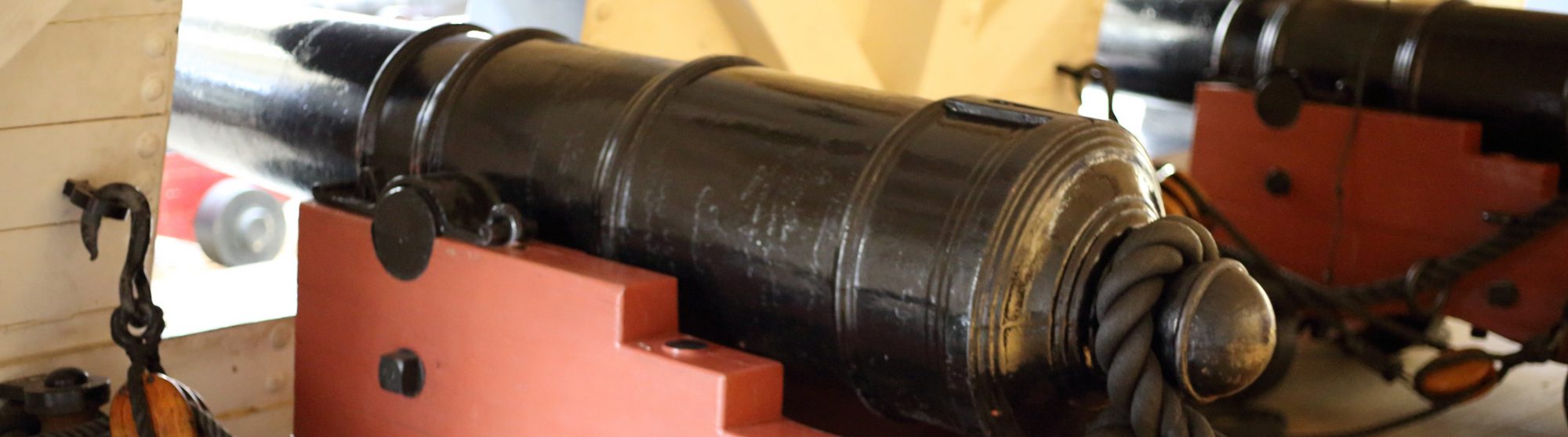
Battles of January 24 summaries plus museums, artwork, books

Battles of January 24 including descriptions of the battles, geographic locations, associated artwork, and museums where a person can find associated artifacts and artwork.

1. Battle of Turnhout

Date: January 24, 1597

War: Eighty Years’ War (also part of the Anglo-Spanish War)

Cause: Dutch forces led by Maurice of Nassau (Prince of Orange) sought to surprise and intercept a Spanish army column commanded by the Count of Varax, which was moving through the Turnhout area in the Spanish Netherlands.

Result: Decisive Dutch and English victory. The Spanish cavalry was driven off, and their infantry was routed with heavy casualties. The battle confirmed the effectiveness of Maurice’s military reforms and modern cavalry tactics.

Paintings & Art Painting: The Battle of Turnhout (Engraving) Artist: Jacques de Gheyn II Year: 1597

Painting: View of the Battle of Turnhout (Etching) Artist: Jan Luyken Year: Circa 1679

Museums & Artifacts

  • Rijksmuseum (Amsterdam, Netherlands): Holds original prints and engravings by Jacques de Gheyn II depicting the battle, as well as weaponry from the Eighty Years’ War era.
  • The British Museum (London, United Kingdom): Collections include the rare 1597 engraving of the battle by Jacques de Gheyn II, commissioned by the States General immediately after the victory.
  • Taxandria Museum (Turnhout, Belgium): Focuses on the history of the Turnhout region, including archaeological finds and information regarding the 1597 battle.

Location General: Turnhout, Belgium (specifically the Tielenheide heathland south of the town).

Coordinates: 51°19′21″N 04°56′41″E

Recommended Book The Dutch Army and the Military Revolution, 1588–1688 by Olaf van Nimwegen.


2. Battle of Spion Kop

Date: January 23–24, 1900 (The battle climaxed and the British retreated on the 24th)

War: Second Boer War

Cause: British forces under General Sir Redvers Buller launched an offensive to break through the Boer defensive line along the Tugela River to relieve the besieged town of Ladysmith. The seizure of the hill Spion Kop was seen as key to commanding the area.

Result: Boer victory. After a bloody and confused battle on the cramped summit involving intense close-quarters fighting and shelling, the British withdrew, suffering heavy casualties.

Paintings & Art Painting: Going Out to the Attack on Spion Kop on January 24, 1900 Artist: Richard Caton Woodville II Year: 1900

Painting: The Battle of Spion Kop (Chromolithograph) Artist: Kurz and Allison Year: 1900

Museums & Artifacts

  • KwaMuhle Museum (Durban, South Africa): Contains exhibits and artifacts relating to the history of the region and the Boer War.
  • Imperial War Museum (London, United Kingdom): Holds extensive collections of uniforms, weaponry, and personal letters from soldiers who fought in the Boer War.
  • Spion Kop Battlefield Memorials (KwaZulu-Natal, South Africa): An open-air museum site with trenches, mass graves, and memorials to the British and Boer soldiers who fell there.
  • War Museum of the Boer Republics (Bloemfontein, South Africa): Dedicated to the Boer experience of the war, housing art and artifacts.

Location General: Spioenkop hill, near Ladysmith, KwaZulu-Natal, South Africa.

Coordinates: 28°39′00″S 29°30′59″E

Recommended Book Hill of Squandered Valour: The Battle for Spion Kop, 1900 by Ron Lock.


3. Battle of the Dogger Bank

Date: January 24, 1915

War: World War I

Cause: British naval intelligence intercepted and decoded German radio signals revealing a plan by the German High Seas Fleet to raid the British fishing fleet and coast. The British Grand Fleet sortied to intercept the German squadron in the North Sea.

Result: British tactical victory. The German armored cruiser SMS Blücher was sunk, and the German flagship Seydlitz was heavily damaged. The British flagship HMS Lion was also damaged, but the German fleet was forced to retreat.

Paintings & Art Painting: The Sinking of the Blücher Artist: William Lionel Wyllie Year: Circa 1915

Painting: Dogger Bank 1915 Artist: Willy Stoewer Year: 1915

Museums & Artifacts

  • National Maritime Museum (Greenwich, United Kingdom): Holds the papers of Admiral David Beatty (British commander at the battle) and various naval paintings of the engagement.
  • Imperial War Museum (London, United Kingdom): Houses naval guns, ship models, and photographic archives of the battle, including dramatic photos of the sinking Blücher.
  • Marine-Ehrenmal Laboe (Laboe, Germany): The German Naval Memorial which commemorates sailors of all nationalities lost at sea, with specific history regarding the High Seas Fleet.

Location General: The Dogger Bank, a large sandbank in the middle of the North Sea.

Coordinates: 54°33′28″N 05°27′50″E

Recommended Book The Battle of the Dogger Bank: The First Dreadnought Engagement by Tobias R. Philbin.

Books for sale

WarScholar Press

Contact Information

For more “Military History Inside Out” please follow me at www.warscholar.org, on Facebook at warscholar, on twitter at Warscholar, on youtube at warscholar1945 and on Instagram @crisalvarezswarscholar. Or subscribe to the podcast on Apple Podcasts | Google Podcasts | Stitcher | Spotify

Tags: military museum, military artwork, battles, Military History, War History, Battle Art, War Paintings, War Art, Military Art, Museum Visit, Art History, Historical Artifacts, Museum Collection, Battlefield Tours, History Museum, Museum Life, History In Art, Historic Preservation, January 24, On This Day, History, Military History, War History, Historical Events, History Buff, World History, Spion Kop, Boer War, Dogger Bank, WWI, Naval History, Battle Of Turnhout, Eighty Years War, Royal Navy, Dutch History, South African History

As an Amazon Associate I earn from qualifying purchases.
Military History Inside Out banner

Battles of January 20 summaries plus museums, artwork, books, and a song

Battles of January 20 including descriptions of the battles, geographic locations, associated artwork, and museums where a person can find associated artifacts and artwork.

Mini-album of the day: Battle of Yungay (4 songs – 2 Latin Pop, two traditional)

1. Battle of Rio de Janeiro (Battle of Uruçumirim)

Date: January 20, 1567

War: The Portuguese conquest of French Antarctica (France Antarctique)

Cause: The Portuguese, led by Estácio de Sá, sought to definitively expel the French colonists and their Tamoio indigenous allies from Guanabara Bay to secure the territory for Portugal.

Result: A decisive Portuguese victory. The French fortification at Uruçumirim was destroyed, effectively ending the French colony of France Antarctique. Estácio de Sá was mortally wounded by a poisoned arrow during the fighting and died a month later.

Paintings & Art

  • Painting/Illustration: Estácio de Sá wounded by an arrow from the Tamoio Indians
    • Artist: Ivan Wasth Rodrigues
    • Year: 1959 (Illustration for historical text)
  • Engraving: Attack on the French Fort (Depictions of the conflict in Guanabara Bay)
    • Artist: Theodor de Bry
    • Year: 1592–1595

Museums & Artifacts

  • Museu Histórico Nacional (Rio de Janeiro, Brazil): Holds vast collections related to the colonial period, including weaponry and maps from the 16th century.
  • Monument to Estácio de Sá (Rio de Janeiro, Brazil): Located in Aterro do Flamengo, near the site of the battle, containing the crypt of Estácio de Sá.

Location

  • General: Flamengo Beach / Morro da Viúva area, Rio de Janeiro, Brazil.
  • Coordinates: 22°55′S 43°10′W

Recommended Book

  • France Antarctique: The French Colony in Brazil by Mario Balbiano di Colarme.

2. Battle of Millstone (Battle of Van Nest’s Mill)

Date: January 20, 1777

War: American Revolutionary War

Cause: Part of the “Forage War” in New Jersey. A British foraging party of roughly 500 men attempted to seize flour and supplies from Van Nest’s Mill.

Result: American victory. New Jersey militia, led by General Philemon Dickinson, crossed an icy river to flank the British, forcing them to retreat and capturing wagons, horses, and cattle.

Paintings & Art

  • Watercolor: Uniforms of the American Revolution (Associated with the Millstone Valley history)
    • Artist: Charles M. Lefferts
    • Year: 1909
  • Modern Art: Skirmish at Millstone (Various local historical illustrations often depicted in NJ historical societies)
    • Artist: Local historical artists
    • Year: Late 20th Century

Museums & Artifacts

  • Wallace House & Old Dutch Parsonage (Somerville, New Jersey): Located near the action, offering context on the Forage War and winter cantonments.
  • Museum of the American Revolution (Philadelphia, USA): Contains artifacts and exhibits detailing the New Jersey campaign and militia warfare.

Location

  • General: Manville, New Jersey, USA (near the Millstone River).
  • Coordinates: 40°32′28″N 74°35′35″W

Recommended Book


3. Battle of Rạch Gầm-Xoài Mút

Date: January 20, 1785

War: Tây Sơn Rebellion (Siamese–Vietnamese War)

Cause: Siamese forces invaded southern Vietnam to restore the Nguyen Lord, Nguyễn Ánh, to power. The Tây Sơn leader, Nguyễn Huệ, lured the Siamese navy into an ambush.

Result: A decisive Tây Sơn victory. The Siamese navy was almost completely destroyed in a surprise attack involving hidden infantry and artillery along the Mekong River banks.

Paintings & Art

  • Monument/Relief: Statue of Nguyen Hue and Relief of the Battle
    • Artist: Vietnamese State Commissioned Artists
    • Year: 2005 (Inauguration of the renovated relic site)
  • Folk Art: Ambush at Rạch Gầm (Woodcuts and propaganda posters)
    • Artist: Unknown
    • Year: 20th Century

Museums & Artifacts

  • Rạch Gầm – Xoài Mút Victory Historical Relic (Tiền Giang Province, Vietnam): A dedicated museum site featuring a massive bronze statue of Nguyễn Huệ, galleries of weapons, and ceramics from the period.
  • Vietnam National Museum of History (Hanoi, Vietnam): Houses weaponry and documents relating to the Tây Sơn dynasty.

Location

  • General: Tiền Giang Province, Vietnam (Section of the Mekong/Tien River).
  • Coordinates: 10°20′N 106°19′E

Recommended Book


4. Battle of Yungay

Date: January 20, 1839

War: War of the Confederation

Cause: The Peru-Bolivian Confederation, led by Andrés de Santa Cruz, threatened the regional balance of power. Chile and Peruvian dissidents (the United Restoration Army) sought to dissolve it.

Result: A decisive Chilean and Restorationist victory. The Confederation was dissolved, and Santa Cruz went into exile.

Paintings & Art

  • Drawing: Panorama of the Battle of Yungay (From a Pacific Watercolor Album)
    • Artist: Unknown (Soldier or Campaign Artist)
    • Year: 1840
  • Sculpture: Monument to the Roto Chileno (Commemorating the common soldier at Yungay)
    • Artist: Virginio Arias
    • Year: 1888

Museums & Artifacts

  • Museo del Carmen de Maipú (Santiago, Chile): Houses significant collections of military art, uniforms, and relics from 19th-century Chilean wars.
  • Museo Nacional de Arqueología, Antropología e Historia del Perú (Lima, Peru): Holds artifacts related to the Republican era and the Confederation.

Location

  • General: Yungay, Ancash Region, Peru.
  • Coordinates: 9°08′S 77°44′W

Recommended Book

  • The Making of Modern Chile by Simon Collier and William F. Sater.

5. Battle of Imbros (Battle of Kusu Bay)

Date: January 20, 1918

War: World War I

Cause: An Ottoman naval sortie led by the battlecruiser Yavuz Sultan Selim (formerly Goeben) and light cruiser Midilli (formerly Breslau) attempted to attack Allied transport ships and monitors.

Result: Strategic Allied victory. While the Ottomans sank two British monitors, they ran into a minefield. The Midilli sank, and the Yavuz was heavily damaged and beached, ceasing to be an offensive threat.

Paintings & Art

  • Watercolor: The Wreck of HMS Raglan: in Kusa Bay, Imbros, after action with the “Goeben”
    • Artist: Frank Mason
    • Year: c. 1918
  • Illustration: Sinking of the Breslau (Daily Sketch illustration)
    • Artist: Period War Artists
    • Year: 1918

Museums & Artifacts

  • Imperial War Museum (London, UK): Holds the Frank Mason painting and naval logs from the engagement.
  • Istanbul Naval Museum (Istanbul, Turkey): Contains artifacts related to the Yavuz and Midilli, including bells, nameplates, and uniforms.

Location

  • General: Off the island of Imbros (Gökçeada), Aegean Sea.
  • Coordinates: 40°14′N 25°58′E

Recommended Book


Books for sale

WarScholar Press

Contact Information

For more “Military History Inside Out” please follow me at www.warscholar.org, on Facebook at warscholar, on twitter at Warscholar, on youtube at warscholar1945 and on Instagram @crisalvarezswarscholar. Or subscribe to the podcast on Apple Podcasts | Google Podcasts | Stitcher | Spotify

Tags: military museum, military artwork, battles, Military History, War History, Battle Art, War Paintings, War Art, Military Art, Museum Visit, Art History, Historical Artifacts, Museum Collection, Battlefield Tours, History Museum, Museum Life, History In Art, Historic Preservation, January 20, On This Day, History, Military History, War History, Historical Events, History Buff, World History, Battle Of Yungay, Battle Of Millstone, Battle Of Imbros, Rach Gam Xoai Mut, Battle Of Rio De Janeiro, American Revolution, WWI, Tay Son, Chilean History, Naval Warfare

As an Amazon Associate I earn from qualifying purchases.
Military History Inside Out banner

Battles of December 20 plus museums and artwork information

Battles of December 20 including descriptions of the battles, geographic locations, associated artwork, and museums where a person can find associated artifacts and artwork.

1. Battle of Dranesville

Date: December 20, 1861

War: American Civil War

Cause: Following the Union disaster at Ball’s Bluff, tensions were high in Northern Virginia. Both Union and Confederate forces sent out foraging parties on the same day to gather hay and supplies from farms between their lines. The escorts for these wagons collided near the village of Dranesville.

Result: Union Victory. Union Brigadier General E.O.C. Ord’s forces arrived first and established a strong position. When Confederate J.E.B. Stuart attacked, he was repulsed by superior Union artillery and infantry fire. The victory provided a much-needed morale boost for the North during a winter of stagnation.

Paintings & Art

Painting: Battle at Dranesville, Va. Decr. 20th, 1861 (Map/Watercolor)

  • Artist: Robert Knox Sneden
  • Year: c. 1861–1865

Painting: The Battle of Dranesville (Engraving)

  • Artist: Harper’s Weekly Staff (Sketch by an officer on the field)
  • Year: 1862

Museums & Artifacts

Virginia Museum of the Civil War (New Market, Virginia, USA): While focused on the later Battle of New Market, this museum serves as a central hub for Civil War history in Virginia, holding varied artifacts from the campaigns in the region.

Virginia Historical Society / Virginia Museum of History & Culture (Richmond, Virginia, USA): Holds the “Sneden Scrapbook,” a massive collection of Civil War watercolors and maps by soldier-artist Robert Knox Sneden, including his depiction of Dranesville.

Location

General: Dranesville, Virginia, USA (Modern-day intersection of Route 7 and Route 193). Coordinates: 39.0044° N, 77.3377° W

Recommended Book Dranesville: A Northern Virginia Town in the Crossfire of a Forgotten Battle, December 20, 1861 by Ryan T. Quint.


2. Battle of Holly Springs (Van Dorn’s Raid)

Date: December 20, 1862

War: American Civil War

Cause: Union General Ulysses S. Grant was advancing toward Vicksburg, Mississippi, using Holly Springs as his primary supply depot. Recognizing the vulnerability of Grant’s long supply line, Confederate General Earl Van Dorn launched a daring cavalry raid behind Union lines to destroy these supplies.

Result: Confederate Victory. Van Dorn’s troopers caught the Union garrison by surprise, capturing the town and burning millions of dollars worth of food, forage, and munitions. The destruction forced Grant to abandon his overland advance on Vicksburg and retreat to Memphis, delaying the fall of Vicksburg by months.

Paintings & Art

Painting: The Raid on Holly Springs (Engraving)

  • Artist: Alexander Simplot (attrib. for Harper’s Weekly)
  • Year: 1863

Painting: Earl Van Dorn (Carte de visite / Photograph)

  • Artist: Vannerson & Jones (Photographers)
  • Year: c. 1861–1863

Museums & Artifacts

Marshall County Historical Museum (Holly Springs, Mississippi, USA): Located in the historic town itself, this museum houses an extensive collection of Civil War artifacts related to the raid, including weaponry, uniforms, and local accounts of the destruction.

Mississippi Civil Rights Museum & Museum of Mississippi History (Jackson, Mississippi, USA): Provides broader context on the Civil War in Mississippi and the impact of military campaigns on both soldier and civilian populations in the state.

Location

General: Holly Springs, Mississippi, USA.

Coordinates: 34.7675° N, 89.4486° W

Recommended Book Holly Springs: Van Dorn, the CSS Arkansas and the Raid That Saved Vicksburg by Brandon H. Beck.


3. First Battle of Champagne (Start of Offensive)

Date: December 20, 1914

War: World War I

Cause: Following the “Race to the Sea” which established the trench lines of the Western Front, the French army launched its first major offensive in the Champagne region. The goal was to break the German line, seize the railway junction at Attigny, and force a German retreat.

Result: Inconclusive / Strategic Failure. The offensive, which began on December 20, resulted in minor tactical gains but failed to break the German lines. It devolved into a war of attrition with heavy casualties on both sides, setting the grim tone for trench warfare in the years to follow.

Paintings & Art

Painting: Fighting in Champagne (Sketch/Painting)

  • Artist: Leon Broquet
  • Year: c. 1914–1918

Painting: Verdun (Associated War Artist for the region)

  • Artist: Félix Vallotton
  • Year: 1917

Museums & Artifacts

Musée de l’Armée (Paris, France): Located at Les Invalides, this is one of the world’s premier military museums, holding vast collections of WWI uniforms, weapons, and artwork, including works by artists commissioned to paint the Champagne front.

La Contemporaine (Nanterre, France): A library and museum specializing in 20th-century history, holding a significant collection of sketches, paintings, and posters from the First World War.

Location

General: Perthes-lès-Hurlus (near Souain-Perthes-lès-Hurlus), Grand Est, France.

Coordinates: 49.1833° N, 4.5500° E

Recommended Book The French Army in the First World War by Elizabeth Greenhalgh.


4. Invasion of Panama (Operation Just Cause)

Date: December 20, 1989

War: United States Invasion of Panama

Cause: Tensions between the U.S. and Panamanian dictator Manuel Noriega reached a breaking point due to drug trafficking indictments, harassment of U.S. personnel, and the killing of a U.S. Marine. President George H.W. Bush ordered the invasion to protect American lives, restore democracy, and seize Noriega.

Result: United States Victory. U.S. forces quickly overwhelmed the Panamanian Defense Forces (PDF). Key targets, including the Comandancia (PDF Headquarters) in the El Chorrillo neighborhood, were seized. Noriega eventually surrendered, and the PDF was dissolved.

Paintings & Art

Painting: El Chorrillo, December 20, 1989 (Mural/Acrylic on Canvas)

  • Artist: Aristides Ureña Ramos
  • Year: 2021

Painting: ManiObras (Series created during the crisis leading to the invasion)

  • Artist: Isabel De Obaldía
  • Year: 1989

Museums & Artifacts

Museo de Arte Contemporáneo (Panama City, Panama): Houses significant Panamanian art from the late 20th century, including works that reflect on the political crisis and the 1989 invasion.

The Panama Canal Museum Collection (Gainesville, Florida, USA): Housed at the University of Florida, this collection preserves documents, photographs, and oral histories related to the American era in Panama, including the 1989 invasion.

Location

General: El Chorrillo Neighborhood, Panama City, Panama.

Coordinates: 8.9503° N, 79.5333° W

Recommended Book Operation Just Cause: The Storming of Panama by Thomas Donnelly.

Books for sale

WarScholar Press

Contact Information

For more “Military History Inside Out” please follow me at www.warscholar.org, on Facebook at warscholar, on twitter at Warscholar, on youtube at warscholar1945 and on Instagram @crisalvarezswarscholar. Or subscribe to the podcast on Apple Podcasts | Google Podcasts | Stitcher | Spotify

Tags: military museum, military artwork, battles, Military History, War History, Battle Art, War Paintings, War Art, Military Art, Museum Visit, Art History, Historical Artifacts, Museum Collection, Battlefield Tours, History Museum, Museum Life, History In Art, Historic Preservation December 20, On This Day, History, Military History, War History, Historical Events, History Buff, World History, Civil War, ACW, Battle Of Dranesville, Holly Springs, Van Dorn Raid, WWI, First World War, Champagne 1914, Operation Just Cause, Invasion Of Panama, Panama 1989, Union Vs Confederate

As an Amazon Associate I earn from qualifying purchases.

Military History Inside Out banner