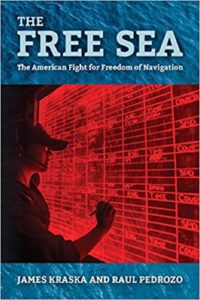
US Naval history book – “The Free Sea” (Naval Institute Press, 2018) – James Kraska interview

James Kraska was a Judge Advocate General for the US Navy and has extensive experience on defense issues and Freedom of Navigation issues. He’s currently a visiting Professor of Law at the Naval War College. He has co-authored a book on the history of US enforcement of Freedom of Navigation and we spoke about the book.

1:56 – Professor. Kraska was a Navy Judge Advocate lawyer and in this capacity he learned and practiced the law regarding Freedom of Navigation. He taught at the Naval War College and completed a degree on the subject. Raul Pedroza, the other author, is also a retired Navy JAG and a professor of law.

3:55 – It has been imperative for the US to protect the sea for economic and security purposes. The book is a mix of history and law on Freedom of Navigation. The book starts with the Quasi-War with France and continues all the way through the current Chinese attempts to assert unlawful control of regional seas.

6:55 – The US defends Freedom of Navigation globally because no one else will do it. Many countries depend on the US to maintain order at sea. The Dutch enforced freedom of the seas in the 1500s and then the British took over enforcing these global rights.

8:57 – The US took over from the British around the 1880s. By 1945, the US had fully assumed the role of protecting freedom of the seas.

11:00 – Freedom of navigation is a continuous struggle to maintain these freedoms. The Gulf of Tonkin and Pueblo incidents are examples of violent conflict involving freedom of navigation.

12:37 – Political will and military capability are needed to maintain freedom of navigation. Territorial seas are part of the global commons. The US has operated on territorial seas and also on high seas to protect navigation freedoms. Surveillance aircraft are also used to maintain freedom of navigation on the seas.

17:31 – Using international airspace to protect the seas has been developing for the last hundred years. The International Civil Aviation organization also supports airspace use to protect Freedom of Navigation.

19:00 – The threat of piracy greatly declined by the 20th century as states have cohered into stronger entities. Piracy existed around Somalia because it was a failed state. Before the Treaty of Paris in 1856, many states used privateers to attack enemy shipping. After the treaty, states agreed to stop using privateers. Since then, threats to freedom of navigation come from nation states.

21:40 – Chinese actions now are the greatest threats to freedom of navigation since Germany’s U-boat wars. During the Cold War, the US and Soviet Union worked in tandem to preserve navigational freedoms.   The Soviet Union needed it more than the US due to the location of their bases. China wants to undo parts of the international agreements on freedom of navigation and keep others out of the waters close to their territory. They want to dominate the seas within the first island chain including the South China Sea and the East China Sea.

27:56 – During WWII, Japan wanted to control the seas around East Asia through war. China is trying to achieve the same goal but through a “Finlandization” of its neighbors. China has used fishing claims to try to assert control in these areas but that doesn’t work within the existing international agreements.

32:57 – The main focus of the book is that freedom of the seas is not a condition that [exists] can exist without promotion and protection. If the US stops exercising rights over global seas, then these rights will erode for all nations.

34:45 – Wilson called for a protection of freedom of navigation by all nations and for all nations. Roosevelt also insisted on maintaining these global rights. A group of united nations met during WWII to maintain rights and later they met after the war to form the United Nations.

37:27 – Both authors have extensive experience in this field especially for events over the last 15 years and beyond. They used CIA archives and presidential libraries to do some research.

39:00 – Washington saw the US as a liberal actor that supported all nations and conducted trade with all as well. But European politics continued to drag the US into conflict and affected trade.

42:50 – He was most moved by the sacrifices made to protect US interests. John Negroponte made an impassioned speech on freedom of the seas to remind people how much US security depended on freedom of the seas.

44:58 – His next writing project might be on the free seas from the British perspective. He’s also working on a project about Japan’s relationship with sea.

45:35 – Many of his articles are on the SSRN.

Links

https://www.ssrn.com/en/

For more “Military History Inside Out” please follow me on Facebook at warscholar, on twitter at Warscholar, on youtube at warscholar1945 and on Instagram @crisalvarezswarscholar

Guests: James Kraska

Host: Cris Alvarez

Tags: military, history, military history, conflict, war, interview, non-fiction book, freedom of the seas, freedom of navigation, China, US, Britain, Germany, Japan, East China Sea, South China Sea, Quasi-War, Pueblo incident, WWII
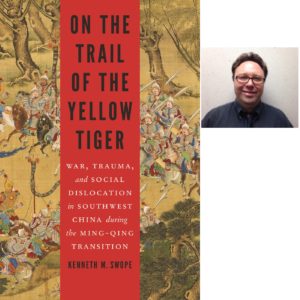
Chinese 17th C military history book – “On The Trail of the Yellow Tiger” (University of Nebraska Press, 2018) – Dr. Ken Swope interview

https://youtu.be/4fgBFYKX12o

Dr. Ken Swope is a history professor at the University of Southern Mississippi. He studies and writes on the imperial and military history of East Asia. In this podcast, I interview him about his upcoming book On the Trail of the Yellow Tiger: War, Trauma, and Social Dislocation in Southwest China During the Ming-Qing Transition.

1:27 – Dr. Ken Swope discusses how he started writing history. He studied Chinese history from the 16th and 17th century and has mainly written on that period.

2:47 – He discusses the origination of the current book which grew out of his research on previous books on Chinese history. He’s used obscure materials for research that not many people know about.

4:32 – The subject of this book is a person nicknamed the Yellow Tiger, a legendary figure associated with peasant rebellions against the Ming Dynasty. Follow on rebellions were very bloody. His own adopted sons become the defenders of the Ming Dynasty against the Manchus.

7:32 – Ken Swope then discusses what made the Ming Dynasty weak and susceptible to rebellion. Much was written in his previous books. Court intrigue contributed to the weakness. At the same time the Manchus were on the rise in the early 1600s. They also suffered climate change that caused epidemics and famine. Many rebels had been part of the postal service and when they were laid off they became bandits.

11:47 – Many of the peasant rebels were literate. China had very high literacy rates in this historical period. Silver from the Americas helped feed Chinese trade.

13:50 – Communications at the time was weak and the rebels could hide in places the government couldn’t reach. The Mings also had been involved in many wars and were taxing people too much. But they still had a huge army in comparison to the rebels. They also used eunuchs to collect taxes for the Emperor.

17:13 – Ken Swope says that the main theme of the book is the effects of war on society. The trauma and changes it creates. Uprisings in the southwest area of China are common and they experience lots of conflict and disruption.

19:12 – He had many resources to go to for research. There were many collected records for the period. Many people wrote things down at the time. Memoirs, diaries, battlefield reports, imperial proclamations, foreign accounts, “wild” histories, and family chronicles.

Lots of the materials were compiled during the Ching period. Other items were compiled in the 19th and 20th centuries.

22:47 – He came across some interesting artifacts. He found an interesting [tomb] grave in an obscure area. He found a public park with steles that had pictures of old heroes and their execution sites. He found the spot where the last Ming Emperor was executed. There was also a big naval battle in 1647 and many artifacts, maybe 30,000, have been found in the river where it happened. Ken Swope did a paper on this find.

27:32 – The old documents are written in classical Chinese. Taiwan and Hong Kong still use traditional characters. It’s a difficult form of Chinese to read. Some of the manuscripts are handwritten which makes them more difficult to read.

30: 10 – Ken Swope most enjoyed looking at documents that only a handful of people have ever read in 400 years. The battlefield sites were also very interesting to see including a famous pass to Chongching. The weapons and historic homes were interesting to see. But there’s not a lot of battlefield preservation in China.

32:18 – He was most surprised by the frank discussions that people had at the time about life in China. People were worried about the poor and being away from home. There were also many rural folk tales about ghosts and evil spirits.   During times of chaos people say the spirit world is out of hand too.

37:00 – Both armies created and read omens during fighting. For example, before Chungdu fell, they claimed all the turtles left the city. But the government also tried to discourage belief in omens.

38:45 – The Jesuit accounts often tried to put a positive spin on the events they were witnessing. Taoism was prominent in this time too. But the people accepted all thoughts and religions together.

40:53 – The biggest challenge he had in researching was figuring out motivations and keeping all the people straight. There were dozens of major players involved in the events he wrote about.

42:42 – He was impressed by how many people thought in terms of a national or regional context and were fighting for something bigger than themselves. Characters will fight to the death for an ideal. This includes female warriors.

44:29 – he wants this book to connect China to the global problems happening in the 17th century. He also wants to increase knowledge about figures who are heroes and famous in China today. China also has more sources for 17th century warfare than anywhere else in the world.

46:30 – Ken Swope didn’t have big problems getting the book published. His success with previous books helped get this one published. Getting your name out there will help get your work published.

48:35 – The next book is a biography of General Zuo. He was a 19th century general who fought the rebellions during this period. He crushed many massive Muslim rebellions and modern people are curious how he accomplished this.

51:23 – His works can be found on Amazon. He’s on Nebraska Press, Oklahoma Press and Routledge. British bookstores carry is books too and so does the British Museum. There’s a lot of interesting Chinese military history to study.


Links

http://www.nebraskapress.unl.edu/nebraska/9780803249950/

For more “Military History Inside Out” please follow me on Facebook at warscholar, on twitter at Warscholar, on youtube at warscholar1945 and on Instagram @crisalvarezswarscholar

Guests: Ken Swope

Host: Cris Alvarez


Chinese 17th C military history book – “On The Trail of the Yellow Tiger” (University of Nebraska Press, 2018) – Dr. Ken Swope interview

Dr. Ken Swope is a history professor at the University of Southern Mississippi. He studies and writes on the imperial and military history of East Asia. In this podcast, I interview him about his upcoming book On the Trail of the Yellow Tiger: War, Trauma, and Social Dislocation in Southwest China During the Ming-Qing Transition.

1:27 – Dr. Ken Swope discusses how he started writing history. He studied Chinese history from the 16th and 17th century and has mainly written on that period.

2:47 – He discusses the origination of the current book which grew out of his research on previous books on Chinese history. He’s used obscure materials for research that not many people know about.

4:32 – The subject of this book is a person nicknamed the Yellow Tiger, a legendary figure associated with peasant rebellions against the Ming Dynasty. Follow on rebellions were very bloody. His own adopted sons become the defenders of the Ming Dynasty against the Manchus.

7:32 – Ken Swope then discusses what made the Ming Dynasty weak and susceptible to rebellion. Much was written in his previous books. Court intrigue contributed to the weakness. At the same time the Manchus were on the rise in the early 1600s. They also suffered climate change that caused epidemics and famine. Many rebels had been part of the postal service and when they were laid off they became bandits.

11:47 – Many of the peasant rebels were literate. China had very high literacy rates in this historical period. Silver from the Americas helped feed Chinese trade.

13:50 – Communications at the time was weak and the rebels could hide in places the government couldn’t reach. The Mings also had been involved in many wars and were taxing people too much. But they still had a huge army in comparison to the rebels. They also used eunuchs to collect taxes for the Emperor.

17:13 – Ken Swope says that the main theme of the book is the effects of war on society. The trauma and changes it creates. Uprisings in the southwest area of China are common and they experience lots of conflict and disruption.

19:12 – He had many resources to go to for research. There were many collected records for the period. Many people wrote things down at the time. Memoirs, diaries, battlefield reports, imperial proclamations, foreign accounts, “wild” histories, and family chronicles.

Lots of the materials were compiled during the Ching period. Other items were compiled in the 19th and 20th centuries.

22:47 – He came across some interesting artifacts. He found an interesting [tomb] grave in an obscure area. He found a public park with steles that had pictures of old heroes and their execution sites. He found the spot where the last Ming Emperor was executed. There was also a big naval battle in 1647 and many artifacts, maybe 30,000, have been found in the river where it happened. Ken Swope did a paper on this find.

27:32 – The old documents are written in classical Chinese. Taiwan and Hong Kong still use traditional characters. It’s a difficult form of Chinese to read. Some of the manuscripts are handwritten which makes them more difficult to read.

30: 10 – Ken Swope most enjoyed looking at documents that only a handful of people have ever read in 400 years. The battlefield sites were also very interesting to see including a famous pass to Chongching. The weapons and historic homes were interesting to see. But there’s not a lot of battlefield preservation in China.

32:18 – He was most surprised by the frank discussions that people had at the time about life in China. People were worried about the poor and being away from home. There were also many rural folk tales about ghosts and evil spirits.   During times of chaos people say the spirit world is out of hand too.

37:00 – Both armies created and read omens during fighting. For example, before Chungdu fell, they claimed all the turtles left the city. But the government also tried to discourage belief in omens.

38:45 – The Jesuit accounts often tried to put a positive spin on the events they were witnessing. Taoism was prominent in this time too. But the people accepted all thoughts and religions together.

40:53 – The biggest challenge he had in researching was figuring out motivations and keeping all the people straight. There were dozens of major players involved in the events he wrote about.

42:42 – He was impressed by how many people thought in terms of a national or regional context and were fighting for something bigger than themselves. Characters will fight to the death for an ideal. This includes female warriors.

44:29 – he wants this book to connect China to the global problems happening in the 17th century. He also wants to increase knowledge about figures who are heroes and famous in China today. China also has more sources for 17th century warfare than anywhere else in the world.

46:30 – Ken Swope didn’t have big problems getting the book published. His success with previous books helped get this one published. Getting your name out there will help get your work published.

48:35 – The next book is a biography of General Zuo. He was a 19th century general who fought the rebellions during this period. He crushed many massive Muslim rebellions and modern people are curious how he accomplished this.

51:23 – His works can be found on Amazon. He’s on Nebraska Press, Oklahoma Press and Routledge. British bookstores carry is books too and so does the British Museum. There’s a lot of interesting Chinese military history to study.


Links

http://www.nebraskapress.unl.edu/nebraska/9780803249950/

For more “Military History Inside Out” please follow me on Facebook at warscholar, on twitter at Warscholar, on youtube at warscholar1945 and on Instagram @crisalvarezswarscholar

Guests: Ken Swope

Host: Cris Alvarez

Tags: military history, chinese history, chinese war, chinese military, peasant rebellion, rebellion, 17th century, ching, ming, manchu, ghosts, spirits, spirit world