Podcast: Play in new window | Download
Subscribe: RSS
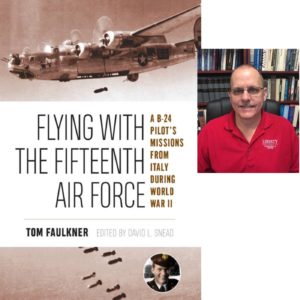
Dr. David Snead is a professor of history at Liberty University. He has edited or written a number of books on US history including WWII history. We discussed his latest project, an edited version of the memoirs of Tom Faulkner, a B-24 pilot in WWII.
1:03 – David talks about how he first got into history.
3:30 – David talks about how he went about editing this WWII memoir.
5:23 – David talks about Tom’s time piloting a B-24 for the 15th Air Force.
12:50 – David talks about Tom’s training and the attitudes of the B-24 versus the B-17.
19:15 – David talks briefly about the Tuskegee airmen.
20:27 – David talks about the facilities the pilots used.
25:06 – David talked about problems Tom might have dealt with because of how young a pilot he was compared to others.
28:36 – David talks about the documents he used to support the things discussed in Tom’s memoirs.
33:58 – David talks about the usefulness of oral histories for this book.
Links of interest
https://untpress.unt.edu/catalog/3816
http://www.liberty.edu/academics/arts-sciences/history/index.cfm?PID=7112
For more “Military History Inside Out” please follow me on Facebook at warscholar, on twitter at Warscholar, on youtube at warscholar1945 and on Instagram @crisalvarezswarscholar
Guests: David Snead
Host: Cris Alvarez
Tags: military, history, military history, conflict, war, interview, non-fiction book, WWII, world war 2, US Air Force, B-24, Europe, Switzerland, missions, Texas
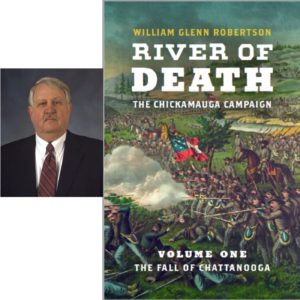 William Glenn Robertson has a PhD in History and has written books and numerous articles on the US Civil War. He became a faculty member of the Army Command and General Staff College at Fort Leavenworth, Kansas in 1981. There he revived the educational technique known as the Staff Ride and wrote the Army’s manual on the subject. He retired as the Director, Combat Studies Institute in 2011. We spoke about his latest US Civil War book on the Chickamauga campaign.
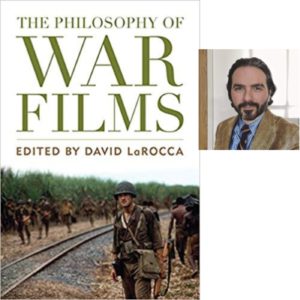 David LaRocca has studied philosophy, film, rhetoric, and religion. He’s worked with a number of institutions where he has studied and taught these subjects. We talk about his editing work on a recent book on war films.