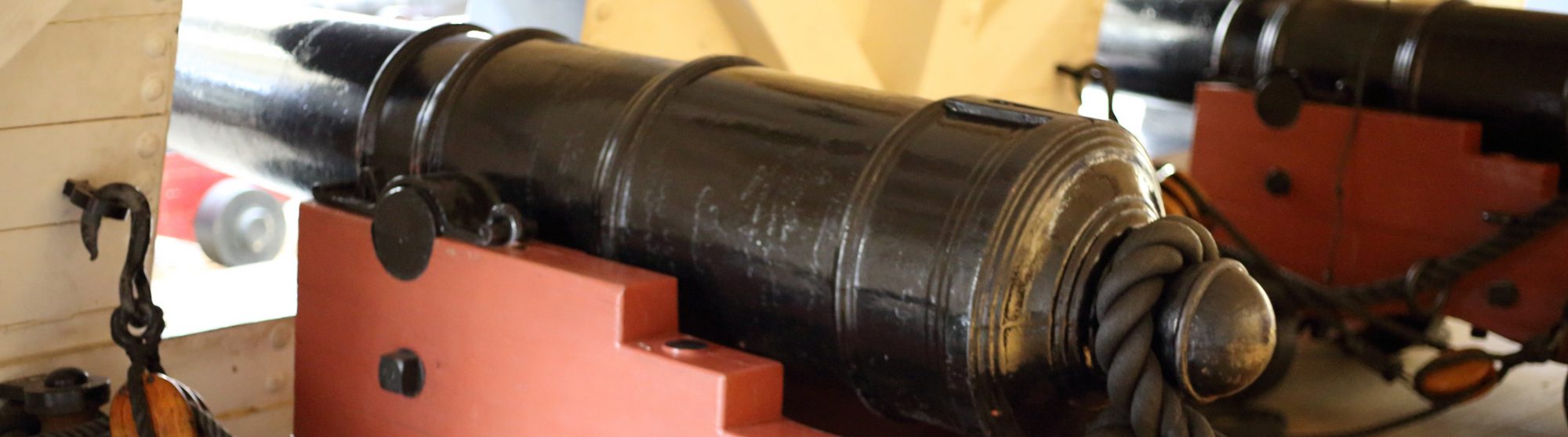
Modern military analysis and history book – “Civil-Military Relations in Southeast Asia” (Cambridge University Press, 2018) – Aurel Croissant interview

Dr. Aurel Croissant is Professor of Political Science at the Institute of Political Science, Ruprecht-Karls-University, Heidelberg. His main research interests include the comparative analysis of political structures and processes in East- and Southeast Asia, the theoretical and empirical analysis of democracy, civil-military relations, terrorism and political violence. We discussed his latest book on civil-military relations in Southeast Asia.

0:55 – Aurel talks about how he got into studying Southeast Asian military affairs.

1:45 – Aurel talks about the countries that he focuses on in the book.

3:59 – Aurel talks about how these various countries developed their military institutions. Both the western model and the Soviet model have had an affect on these countries.

9:28 – Aurel talks about the military startegies of these countries.

10:21 – Aurel talks about these militaries roles in their respective societies.

13:53 – Aurel talks about which servies dominate the various militaries.

15:18 – Aurel talks about how he did the research for the book.

19:27 – Aurel talks about the influence that elites have in civil-military continuity.

27:34 – Aurel can be found on the Heidelberg University website.

Links of interest

https://www.uni-heidelberg.de/politikwissenschaften/personal/croissant/croissant_en.html

https://www.cambridge.org/core/elements/civilmilitary-relations-in-southeast-asia/6E22E7C9244503D345920BF7F44347A2

For more “Military History Inside Out” please follow me on Facebook at warscholar, on twitter at Warscholar, on youtube at warscholar1945 and on Instagram @crisalvarezswarscholar

Guests: Aurel Croissant

Host: Cris Alvarez

Tags: military, history, military history, conflict, war, interview, non-fiction book, Southeast Asia, independence, colonialism, Malaysia, Singapore, Vietnam, Indonesia
WWI history book – “The Myriad Legacies of 1917 – A Year of War and Revolution” (Palgrave Macmillan, 2018) -Maartje Abbenhuis interview

Maartje Abbenhuis is a historian of of neutrality and internationalism, especially in regards to Europe from 1815 to 1919. She’s written numerous articles and books on the subject and teaches at the University of Auckland. We talk about her most recent work, a collection of essays on WWI in 1917 that she co-edited.

1:05 – Maartje talks about how she got into editing a book on WWI.

6:17 – We discuss the parallel between Lord of the Rings and WWI.

9:09 – Maartje talks about the essays in the book.

10:54 – Maartje talks about security and civil rights during WWI.

13:15 – Maartje talks about how the book reflects the New Zealand symposium that it was meant to accompany.

18:06 – Maartje talks about India’s involvement in WWI and also about Indian resistane to the British at this time.

25:12 – Maartje talks about New Zealand and WWI.

30:15 – Maartje talks about some of the research that went into the essays and what the collection goals were. She mentions that two of the essays were written by museum curators and directors.

33:18 – Maartje talks about German memories of WWI.

43:17 – Maartje talks about the global effects of WWI.

56:55 – Maartje talks about New Zealand and how its foundation myths connect to WWI.

1:00:26 – Maartje is on twitter @maartjeabb.

Links of interest

https://twitter.com/maartjeabb?lang=en

https://www.palgrave.com/us/book/9783319736846

For more “Military History Inside Out” please follow me on Facebook at warscholar, on twitter at Warscholar, on youtube at warscholar1945 and on Instagram @crisalvarezswarscholar

Guests: Maartje Abbenhuis

Host: Cris Alvarez

Tags: military, history, military history, conflict, war, interview, non-fiction book, India, Britian, WWII, Germany, New Zealand, WWI, Empire, Ottoman, Maori, Australia, United States, California, latin America, globalization, industrial warfare

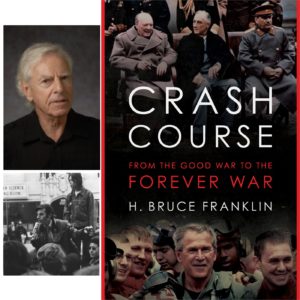
20th Century US Warfare history book – “Crash Course” (Rutgers University Press, 2018) – H. Bruce Franklin interview

H Bruce Franklin was an US Air Force navigator and intelligence officer but then became an anti-war activist. He’s written nineteen books and hundreds of articles and we talk about his latest book about the wars of the United States in the 20th century.

1:01 – Bruce talks about how he got into studying and writing on war. He talks about his influences when he was young.

2:01 – Bruce talks about the book and his life experiences that led to writing this book starting with when he was eleven on the day of the end of WWII. When he got older he joined the Air Force as a navigator. He talks about his reconnaissance and provocation missions over the Soviet Union.

8:37 – Bruce talks about his time with the Strategic Air Command and their efficiency and proficiency.

10:21 – Bruce talks about his first mission as a combat ready navigator and being part of a four plane cell. The mission almost resulted in an air collision.

13:49 – Bruce talks about the military-industrial complex and how it’s affected the wars the US has been part of.

25:58 – Bruce talks about the events that switched his political thinking on war.

27: 29 – Bruce mentions the anti-napalm movement.

31:53 – Bruce talks about the Korean War.

40:17 – Bruce talks about the historical archival material that he used for the book.

46:01 – Bruce talks about an interesting episode associated with the Cuban Missile Crisis.

56:00 – Bruce talks about 1991, the disintegration of the Soviet Union, and the peace dividend.

1:01:56 – He has a website at HBRuceFranklin.com where people can find information on all his books. It also has an events page.

Links of interest

https://www.hbrucefranklin.com/

https://www.rutgersuniversitypress.org/crash-course/9781978800939

For more “Military History Inside Out” please follow me on Facebook at warscholar, on twitter at Warscholar, on youtube at warscholar1945 and on Instagram @crisalvarezswarscholar

Guests: H. Bruce Franklin

Host: Cris Alvarez

Tags: military, history, military history, conflict, war, interview, non-fiction book, Cold War, Soviet Union, anti-war, Air Force, Strategic Air Command, KC-97, Boeing, bombers, Vietnam War, Korean War, Cuban Missile Crisis, Iraq, peace dividend, Saddam Hussein