Battles of January 19 summaries plus museums, artwork, books, and a song

Battles of January 19 including descriptions of the battles, geographic locations, associated artwork, and museums where a person can find associated artifacts and artwork.

Song of the day:

Quentin Burns variation 1

Quentin Burns variation 2

1. Battle of Mill Springs

Date: January 19, 1862

War: American Civil War

Cause: This battle was precipitated by the Confederate need to defend the Cumberland Gap and the Union Army’s drive to push the Confederate defense line out of Eastern Kentucky. Confederate General Felix Zollicoffer, against orders, moved his troops across the Cumberland River to the north bank, placing them in a precarious position with the river at their back. Union General George H. Thomas moved to attack this exposed force.

Result: The battle was a decisive Union victory. It broke the Confederate defensive line in Eastern Kentucky and led to the death of General Zollicoffer (the first Confederate general to die in the Western Theater). The victory boosted Northern morale and opened the path for the Union into Tennessee.

Paintings & Art

  • Painting: Battle of Mill Spring, K.Y. Jan. 19th 1862
    • Artist: Currier & Ives (Lithograph)
    • Year: c. 1862

Museums & Artifacts

  • Mill Springs Battlefield National Monument (Nancy, Kentucky, USA): The Visitor Center and Museum houses a comprehensive collection of artifacts recovered from the battlefield, including weapons, uniforms, and personal items of soldiers. It also features interpretive exhibits on the battle’s strategy.
  • Smithsonian American Art Museum (Washington, D.C., USA): Holds various Civil War lithographs, including works by Currier & Ives similar to the Mill Springs prints.

Location

  • General: Nancy, Kentucky (historically Logan’s Crossroads).
  • Coordinates: 37.0544° N, 84.7397° W

Recommended Book


2. Siege of Ciudad Rodrigo

Date: Stormed on January 19, 1812 (January 7-20, 1812)

War: The Peninsular War (Napoleonic Wars)

Cause: Following victories in Portugal, the Duke of Wellington needed to secure the key border fortresses to open the invasion route into French-held Spain. Ciudad Rodrigo controlled the northern corridor. Wellington launched a rapid siege to capture the city before French Marshal Marmont could bring a relief army.

Result: The British captured the fortress after a bloody storming of the breaches on the evening of January 19. The victory secured the frontier and allowed Wellington to advance toward Badajoz and eventually Madrid. However, the discipline of the British troops collapsed after the victory, leading to a brutal sack of the city.

Paintings & Art

  • Painting: The Storming of Ciudad Rodrigo (Aquatint/Engraving)
    • Artist: Thomas Sutherland (after William Heath)
    • Year: 1815
  • Artifact: The Wellington Service Ice Pails (Depicting the storming)
    • Artist: Designed by Digby Scott and Benjamin Smith II
    • Year: c. 1814–1817

Museums & Artifacts

  • National Army Museum (London, UK): Holds extensive collections relating to the Peninsular War, including maps, letters from Wellington, and prints depicting the siege.
  • Apsley House (The Wellington Museum) (London, UK): The former home of the Duke of Wellington houses the famous Portuguese Service (silver) and the Ice Pails which depict the battle scenes, along with captured French imperial eagles.
  • British Museum (London, UK): Holds the original prints and etchings of the storming by Sutherland and Heath.

Location

  • General: Ciudad Rodrigo, Salamanca, Spain.
  • Coordinates: 40.5982° N, 6.5305° W

Recommended Book


3. Battle of St. Quentin

Date: January 19, 1871

War: Franco-Prussian War

Cause: As the Prussians besieged Paris, the French Army of the North, commanded by General Faidherbe, attempted to disrupt the Prussian supply lines and relieve the capital. The Prussian First Army, under General Goeben, moved to intercept the French forces near the town of Saint-Quentin to prevent this relief effort.

Result: The Prussians won a clear victory, forcing the French Army of the North to retreat in disorder. This defeat effectively ended any hope of relieving Paris from the north, and the city surrendered shortly thereafter, leading to the end of the war and the unification of Germany.

Paintings & Art

  • Painting: Battle of St. Quentin, 19 January 1871 (Lithograph)
    • Artist: Richard Knötel
    • Year: c. Late 19th Century (from Uniformenkunde)
  • Painting: Charge of the German Cavalry at St. Quentin
    • Artist: Amling Franz
    • Year: c. 1875

Museums & Artifacts

  • Musée de l’Armée (Invalides) (Paris, France): Contains one of the world’s largest collections of military history, including uniforms, weaponry, and paintings from the Franco-Prussian War (War of 1870).
  • Deutsches Historisches Museum (Berlin, Germany): Holds artifacts and documents relating to the wars of German unification, including the Battle of St. Quentin.
  • Town of Saint-Quentin (Aisne, France): The town itself features the Monument de 1870 commemorating the defense of the city.

Location

  • General: Saint-Quentin, Aisne, Hauts-de-France, France.
  • Coordinates: 49.8454° N, 3.2864° E

Recommended Book


4. Battle of Braddock Down

Date: January 19, 1643

War: First English Civil War

Cause: Royalist forces in Cornwall, led by Sir Bevil Grenville and Sir Ralph Hopton, were attempting to secure the county for King Charles I. They were intercepted by a Parliamentarian army under Colonel Ruthin, who had invaded Cornwall and was camped at Braddock Down, waiting for reinforcements.

Result: The Royalists launched a surprise attack. After an exchange of musket fire, a Royalist charge broke the Parliamentarian line. The Parliamentarians fled, and the Royalists secured Cornwall, capturing substantial arms and prisoners.

Paintings & Art

  • Painting: Sir Bevil Grenville (Portrait associated with the era/commander)
    • Artist: Unknown (School of Van Dyck)
    • Year: c. 1640s
  • Illustration: The Battle of Braddock Down
    • Artist: Harry Fisher (Historical Illustrator)
    • Year: 20th Century (Modern historical reconstruction)

Museums & Artifacts

  • Royal Cornwall Museum (Truro, UK): Contains exhibits on the Civil War in Cornwall, including artifacts related to Sir Bevil Grenville and the Royalist campaigns.
  • National Civil War Centre (Newark, UK): The dedicated museum for this conflict, housing armor, pamphlets, and weaponry used during battles like Braddock Down.

Location

  • General: Boconnoc / Braddock, Cornwall, United Kingdom.
  • Coordinates: 50.4160° N, 4.5660° W

Recommended Book

Books for sale

WarScholar Press

Contact Information

For more “Military History Inside Out” please follow me at www.warscholar.org, on Facebook at warscholar, on twitter at Warscholar, on youtube at warscholar1945 and on Instagram @crisalvarezswarscholar. Or subscribe to the podcast on Apple Podcasts | Google Podcasts | Stitcher | Spotify

Tags: military museum, military artwork, battles, Military History, War History, Battle Art, War Paintings, War Art, Military Art, Museum Visit, Art History, Historical Artifacts, Museum Collection, Battlefield Tours, History Museum, Museum Life, History In Art, Historic Preservation, January 19, On This Day, History, Military History, War History, Historical Events, History Buff, World History, Civil War, Mill Springs, Union Victory, Napoleonic Wars, Peninsular War, Ciudad Rodrigo, Wellington, Franco Prussian War, St Quentin, English Civil War, Royalists, Cornwall History

As an Amazon Associate I earn from qualifying purchases.

Military History Inside Out banner

Battles of January 16 summaries plus museums, artwork, and books

Battles of January 16 including descriptions of the battles, geographic locations, associated artwork, and museums where a person can find associated artifacts and artwork.

Song of the day: The Arrival (Jan 16, 378) Latin Pop Song

1. Battle of Corunna (Battle of Elviña)

Date: January 16, 1809

War: The Peninsular War (Part of the Napoleonic Wars)

Cause: The British army, led by Lieutenant-General Sir John Moore, had been retreating across northern Spain in harsh winter conditions, pursued closely by French forces under Marshal Soult. The British needed to hold off the French long enough to evacuate their exhausted troops by sea from the port of Corunna (A Coruña).

Result: Tactical British Victory / Strategic French Success. The British successfully repelled the French attacks, allowing their army to embark and escape to England. However, the British commander, Sir John Moore, was mortally wounded by a cannonball during the battle. The French took control of the region after the British departure.

Paintings & Art

  • Painting: The Death of Sir John Moore at Corunna
    • Artist: Henry James Richter (also depicted by various “English School” artists and Thomas Lawrence)
    • Year: c. 1810s (Lawrence’s portrait of Moore was earlier, but death scenes appeared shortly after the battle).

Museums & Artifacts

  • National Army Museum (London, United Kingdom): Holds uniforms, letters, and lithographs depicting the death of Moore and the retreat.
  • Museo Militar Regional de Coruña (A Coruña, Spain): Located on the actual site of the battle, this museum houses artifacts, weapons, and dioramas specific to the engagement.
  • St. Paul’s Cathedral (London, United Kingdom): Contains a prominent monument and statue dedicated to Sir John Moore.

Location

  • General: Elviña, on the outskirts of A Coruña, Galicia, Spain.
  • Coordinates: 43.3333° N, 8.4167° W

Recommended Book


2. Battle of Cape St. Vincent (The “Moonlight Battle”)

Date: January 16, 1780

War: American Revolutionary War (Anglo-Spanish War)

Cause: A British fleet under Admiral Sir George Rodney was sailing to relieve the Great Siege of Gibraltar, which was being blockaded by Spanish forces. En route, they encountered a Spanish squadron under Don Juan de Lángara off the coast of Portugal.

Result: Decisive British Victory. The battle was unique because it was fought at night (rare for the Age of Sail), earning it the nickname “The Moonlight Battle.” Rodney captured four Spanish ships and destroyed two others, successfully breaking the blockade to resupply Gibraltar.

Paintings & Art

  • Painting: The Moonlight Battle off Cape St Vincent, 16 January 1780
    • Artist: Thomas Luny
    • Year: 1781

Museums & Artifacts

  • National Maritime Museum (Greenwich, United Kingdom): Houses Thomas Luny’s famous painting of the battle, as well as ship models and logs from Admiral Rodney’s fleet.
  • Museo Naval (Madrid, Spain): Contains naval records and artifacts regarding the Spanish fleet and the blockade of Gibraltar.

Location

  • General: Atlantic Ocean, off the coast of Cape St. Vincent, Algarve, Portugal.
  • Coordinates: 37.0231° N, 8.9964° W

Recommended Book


3. The Arrival (The Takeover of Tikal)

Date: January 16, 378

War: Teotihuacan-Maya Conflict (Internal Mesoamerican Power Shift)

Cause: This “battle” was a calculated military intervention (or coup). Forces from the central Mexican metropolis of Teotihuacan, led by a warlord named Sihyaj Kʼahkʼ (“Fire is Born”), marched into the Maya city of Tikal to install a new dynasty and bring the city into Teotihuacan’s sphere of influence.

Result: Teotihuacan Victory. The reigning king of Tikal, Chak Tok Ich’aak I, died on the exact same day Sihyaj Kʼahkʼ arrived (likely executed). A new dynasty was established, launching Tikal into a golden age of dominance under Mexican-influenced leadership.

Paintings & Art

  • Artwork: Stela 31 (The Ballcourt Marker)
    • Artist: Ancient Maya/Teotihuacan Sculptors
    • Year: c. 378–380 AD (Commissioned shortly after the event).

Museums & Artifacts

  • Tikal National Park (Flores, Guatemala): The site itself serves as an open-air museum where the stelae recording this specific date (8.17.1.4.12 in the Long Count) were found.
  • Museo Nacional de Arqueología y Etnología (Guatemala City, Guatemala): Houses many of the finest original jade artifacts and ceramics from Tikal demonstrating the shift in style after 378 AD.

Location

  • General: Tikal, Petén Department, Guatemala.
  • Coordinates: 17.2220° N, 89.6237° W

Recommended Book

Books for sale

WarScholar Press

Contact Information

For more “Military History Inside Out” please follow me at www.warscholar.org, on Facebook at warscholar, on twitter at Warscholar, on youtube at warscholar1945 and on Instagram @crisalvarezswarscholar. Or subscribe to the podcast on Apple Podcasts | Google Podcasts | Stitcher | Spotify

Tags: military museum, military artwork, battles, Military History, War History, Battle Art, War Paintings, War Art, Military Art, Museum Visit, Art History, Historical Artifacts, Museum Collection, Battlefield Tours, History Museum, Museum Life, History In Art, Historic Preservation, January 16, On This Day, History, Military History, War History, Historical Events, History Buff, World History, Battle Of Corunna, Sir John Moore, Peninsular War, Napoleonic Wars, Cape St Vincent, Moonlight Battle, Royal Navy, Admiral Rodney, Tikal, Maya History, Teotihuacan, Pondicherry, Seven Years War, Maya Archaeology

As an Amazon Associate I earn from qualifying purchases.

Military History Inside Out banner

Military History Newsletter December 2019

The sample first issue of my newsletter.  Sign up on the right side of this page to get it emailed directly to you.

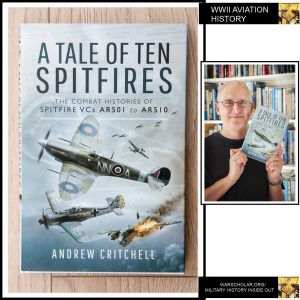
Welcome to the first issue of the WarScholar newsletter.  The Marines in Iraq and Spitfires over Europe this week. I interviewed Ed Darak about his book on the Marines fight in Anbar in 2006-2007. Listen here. I also interviewed Andrew Critchell about his history of ten Spitfires fighting the German Luftwaffe in WII. Read it here.

And in our book list below we give you everything you could ask for in military history. Tactics, war movies, logistics, ancient, WWII, Samurai clans, Crusaders, Napoleonic artillery and more. Enjoy! Click here for a list of relevant books being published between January and June 2020.

AFGHANISTAN, IRAQ, AND SYRIA – MODERN WARFARE

This is Minuteman

Night Letters

ANCIENT WARFARE

Brill’s Companion to Sieges in the Ancient Mediterranean

The Persian War in Herodotus and Other Ancient Voices

Ancient Egyptian Warfare

ASIAN AND AFRICAN PRE-MODERN WARFARE

The Remarkable History of the Yagyu Clan – William De Lange

GENERAL MILITARY HISTORY

Delivering Victory

MECHANIZED WARFARE, ARTILLERY, AND TANK STUDIES – MODERN

German Military Vehicles in the Spanish Civil War

MEDIEVAL AND DARK AGES WARFARE

Recalcitrant Crusaders?

Britain in the Age of Arthur

MILITARY AVIATION

The Messerschmitt Bf 109 E – David Johnston

MODERN MILITARY STUDIES

The Culture of Military Organizations

MODERN WARFARE/20TH-21ST CENTURY

Insurgency and War in Nigeria

Laying the Past to Rest

No Barrier Can Contain It

NAPOLEONIC WARS/19TH CENTURY WARFARE

The French Artillery of the Napoleonic War

NATIVE AMERICAN WARS

Seeking Conflict in Mesoamerica

NAVAL SHIP STUDIES

US Landing Craft of World War II, Vol 1

RENAISSANCE WARFARE

Warfare and Politics

TERRORISM AND WAR

Terrorist Decision-Making

UNITED STATES CIVIL WAR

The Second American Revolution

Caught in the Maelstrom

The Visible Confederacy

Living by Inches

WAR AND CULTURE

The Great War in Hollywood Memory, 1918-1939

WAR ART, LITERATURE, AND MOVIES

Nightmares in the Dream Sanctuary

Civil War Monuments and the Militarization of America

WORLD WAR I

Rumors of the Great War

Ireland and the Great War

Little Italy in the Great War

WORLD WAR II

Courage and Fear

Blind Bombing

For more military history…

http://www.warscholar.org

Facebook: WarScholar

Youtube: Warscholar1945

Twitter: WarScholar

Military History Inside Out podcast on Apple Podcasts

Military History Inside Out podcast on stitcher

Military History Inside Out podcast on Spotify

Instagram: crisalvarezwarscholar

As an Amazon Associate I earn from qualifying purchases.