US Civil War military history book – “The Fight for the Old North State: The Civil War in North Carolina, January-May 1864” (University of Kansas Press, 2019) – Hampton Newsome – WarScholar written interview 7

Check out the book here

https://kansaspress.ku.edu/978-0-7006-2746-2.html

Brother against brother is the mantra most often heard when discussing the United States Civil War. But how often do readers consider what this means? Some of the citizens of Northern states enlisted in the Confederate Army and vice versa. In the eyes of the people of their states, these soldiers were traitors and often treated as such. That is one of the issues addressed by Hampton Newsome in his book on North Carolina during the Civil War.

As opposing armies clashed against each other in the state, so did civilians clash against each other as well as the war dragged on. African-Americans sought freedom and the chance to fight against former oppressors. North Carolina wanted peace and considered negotiating peace separately from the other Southern states. The war as a whole was much more than tactics and military operations and Hampton Newsome weaves these parts together in an engaging and enlightening read. In fact the book was named Book of the Year for 2019 by Civil War Books and Authors. https://cwba.blogspot.com/2019/12/2019-civil-war-books-and-authors-year.html

Hampton Newsome has been researching and writing on the Civil War for many years and we discussed this latest book The Fight for the Old North State: The Civil War in North Carolina, January-May 1864. There are still many stories to be told about the Civil War and Mr. Newsome has written about some very important ones.

How did you become interested in studying and writing on the subject of your book?

While I was searching for a new project several years ago, a fellow author suggested I look into Confederate efforts to capture key Union positions in North Carolina during 1864. As I read up on these events and gathered materials, I realized these battles formed a compelling story that involved not only fighting on land and water but other issues such as local resistance to the Confederacy, emancipation, desertion, and a crucial gubernatorial election.

What aspect of this subject does your book focus on?

Specifically, the book recounts the Confederate operations against New Bern, raids conducted by both sides, combat between ironclads and wooden gunboats, and the rebel victory at the battle of Plymouth. Although it is primarily a military study, the book also delves into the connections between these engagements and the political and social developments at the time.

What are the major themes of this book?

In addition to the operational and tactical details of this campaign, the book explores the motivations behind the Confederate offensive. Specifically, in attacking Union positions, rebel leaders sought to secure vital supplies from North Carolina for Robert E. Lee’s army and to dampen a growing peace movement that threatened to pull the state out of the war. The resulting engagements involved complex joint army and navy operations, daring raids, and deadly ironclads.

What resource materials did you use for your research?

I relied on a wide array of sources for this project. As with most Civil War military studies, the research began with the Official Records (“O.R.”), a collection of more than 100 bound volumes of reports and correspondence compiled and published by the War and Navy Departments a few decades after the conflict. This essential source, however, formed only the tip of the research iceberg. In searching for records beyond the O.R., I dug into the unpublished departmental, army, and personnel records at the National Archives. I also gathered diaries, letters, and other material housed at university and historical society collections around the country. I am grateful for the tremendous help from many excellent archivists at these various institutions.

I also made extensive use of period newspapers, especially those published in North Carolina. These have been a gold mine for me in this and other projects. They often contain eyewitness accounts in the form of letters sent home by soldiers on the battlefields and in the camps. These soldier dispatches, full of details not found elsewhere, provide a valuable source of information that augments official reports and correspondence. In addition, the papers routinely include colorful, unflinchingly-partisan editorials, which furnish a clear window into how different factions viewed the events of the day. Despite their immense value, I approach the newspapers with caution and weigh the reliability of each story. For instance, the lead “news” articles are often vague and inaccurate, frequently the product of murky, third-hand rumors trickling across editors’ desks.

What part of the research process was most enjoyable for you?

I enjoy the “eureka” moments. There have been many of those, both big and small. For example, in gathering research for my book on the Petersburg Campaign a few years ago, I found a lengthy court martial transcript at the National Archives, which, according to the file log, had only been viewed once before. It was stuffed with testimony from high-ranking Federal officers, and included a detailed, hand-drawn battlefield map. In my research on The Fight for the Old North State, I came upon the full transcript of an investigation into the looting, vandalism, and arson that destroyed a large part of Washington, N.C. in late April 1864. The report contained the accounts of Union commanders (both army and navy) as well as the testimony of citizens who witnessed the events that left much of that town in ashes. As far as I could tell, no author had previously used that document.

Was there anything that you wrote about during the project that moved you?

The 1864 events in North Carolina produced much tragedy and loss. The study discusses the sometimes shifting loyalties as well as the trials of the state’s population, including the challenges faced by African-Americans seeking to gain their freedom and serve the Union war effort. Throughout the eastern part of the state, many slaves fled from their owners and joined the Union army as new recruits. After the Battle of Plymouth, the Confederates captured and then killed a number of these men, an act repeated on battlefields elsewhere, including the Crater and Fort Pillow. In addition, the book recounts the execution by Confederate officials of nearly two dozen white North Carolinians who had enlisted in Union regiments. These unfortunate men had served in Confederate units early in the war, switched sides, and then had become prisoners of the rebels during the fighting at New Bern. I was struck by how these episodes brought into relief the brutal, tangled nature of the war in the region.

What was the most difficult issue to research?

The search for elusive information about Confederate supply efforts in North Carolina was particularly difficult. Most of the official Confederate commissary records from 1864 have not survived. However, I was able to find important information elsewhere in period newspapers and in correspondence. I also struggled to locate information about Union African-American recruits at Plymouth. In trying to track down several details, I pored over regimental books and personnel files housed at the National Archives as well as records in the collections at Duke University. Ultimately, I managed to put many of the pieces together but, as is usually the case, there is certainly still more to find.

What do you hope the book will do for readers?

Foremost, I hope the book provides readers with an engaging narrative of interesting, yet little-known events during the war. Additionally, I’d like them to come away with an appreciation of how complicated things were in North Carolina at the time, both socially and politically. In addition to the military details, the book highlights many issues impacting the state during the conflict including unionist sentiment, internal divisions, the contributions of African-Americans to the Union war effort, the enlistment of North Carolinians into Federal regiments, and the peace movement.

Did you have any difficulties in finishing the book and publishing it and if so, how did you overcome those?

Though this book took several years to complete, I was fortunate to avoid any extraordinary problems along the way. I enjoy juggling the research, writing, and editing involved in the process of assembling a book. I also make the maps. But there is no way I could have completed this project on my own. I’m thankful to many who helped out by assisting with research, offering suggestions, and reading drafts. Among the many readers was my father, who grew up in Ahoskie, North Carolina, not far from where many of the book’s events occurred. In addition, I’ve been lucky to work with fantastic academic presses and University Press of Kansas has been no exception. The editors, copy editors, designers, and marketing staff at Kansas have been great to work with and have produced a wonderful looking book in my opinion.

Do you have any online accounts where people can find more of your work?  

I have a blog, Ransack Garret and Closet, at www.hamptonnewsome.blogspot.com. I am also on Twitter @hamptonnewsome.

Author Biography

Hampton Newsome

Author of Richmond Must Fall: The Richmond-Petersburg Campaign, October 1864 (Kent State Univ. Press, 2013) and co-editor (with John Horn and John Selby) of Civil War Talks: Further Reminiscences of George S. Bernard and His Fellow Veterans (Univ. of Virginia Press, 2012).

Project/work being discussed: The Fight for the Old North State: The Civil War in North Carolina, January-May 1864, (Modern War Studies) (Univ. Press of Kansas, 2019).

Check out the book here

https://kansaspress.ku.edu/978-0-7006-2746-2.html

As an Amazon Associate I earn from qualifying purchases.
Military History Newsletter December 2019

The sample first issue of my newsletter.  Sign up on the right side of this page to get it emailed directly to you.

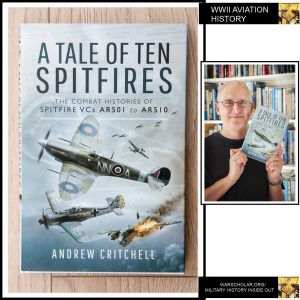
Welcome to the first issue of the WarScholar newsletter.  The Marines in Iraq and Spitfires over Europe this week. I interviewed Ed Darak about his book on the Marines fight in Anbar in 2006-2007. Listen here. I also interviewed Andrew Critchell about his history of ten Spitfires fighting the German Luftwaffe in WII. Read it here.

And in our book list below we give you everything you could ask for in military history. Tactics, war movies, logistics, ancient, WWII, Samurai clans, Crusaders, Napoleonic artillery and more. Enjoy! Click here for a list of relevant books being published between January and June 2020.

AFGHANISTAN, IRAQ, AND SYRIA – MODERN WARFARE

This is Minuteman

Night Letters

ANCIENT WARFARE

Brill’s Companion to Sieges in the Ancient Mediterranean

The Persian War in Herodotus and Other Ancient Voices

Ancient Egyptian Warfare

ASIAN AND AFRICAN PRE-MODERN WARFARE

The Remarkable History of the Yagyu Clan – William De Lange

GENERAL MILITARY HISTORY

Delivering Victory

MECHANIZED WARFARE, ARTILLERY, AND TANK STUDIES – MODERN

German Military Vehicles in the Spanish Civil War

MEDIEVAL AND DARK AGES WARFARE

Recalcitrant Crusaders?

Britain in the Age of Arthur

MILITARY AVIATION

The Messerschmitt Bf 109 E – David Johnston

MODERN MILITARY STUDIES

The Culture of Military Organizations

MODERN WARFARE/20TH-21ST CENTURY

Insurgency and War in Nigeria

Laying the Past to Rest

No Barrier Can Contain It

NAPOLEONIC WARS/19TH CENTURY WARFARE

The French Artillery of the Napoleonic War

NATIVE AMERICAN WARS

Seeking Conflict in Mesoamerica

NAVAL SHIP STUDIES

US Landing Craft of World War II, Vol 1

RENAISSANCE WARFARE

Warfare and Politics

TERRORISM AND WAR

Terrorist Decision-Making

UNITED STATES CIVIL WAR

The Second American Revolution

Caught in the Maelstrom

The Visible Confederacy

Living by Inches

WAR AND CULTURE

The Great War in Hollywood Memory, 1918-1939

WAR ART, LITERATURE, AND MOVIES

Nightmares in the Dream Sanctuary

Civil War Monuments and the Militarization of America

WORLD WAR I

Rumors of the Great War

Ireland and the Great War

Little Italy in the Great War

WORLD WAR II

Courage and Fear

Blind Bombing

For more military history…

http://www.warscholar.org

Facebook: WarScholar

Youtube: Warscholar1945

Twitter: WarScholar

Military History Inside Out podcast on Apple Podcasts

Military History Inside Out podcast on stitcher

Military History Inside Out podcast on Spotify

Instagram: crisalvarezwarscholar

As an Amazon Associate I earn from qualifying purchases.
US Civil War era history book – “Abraham Lincoln Statesmanship and the Limits of Liberal Democracy” (Southern Illinois University Press, 2019) – Jon D. Schaff – WarScholar written interview 4

http://siupress.siu.edu/books/978-0-8093-3737-8

When people hear the name Lincoln, they usually think immediately of the U.S. Civil War and the incredible violence and hate that marked that national conflict. However, Lincoln was in charge of more than just the Union military. He also had to worry about the many needs of the nation ranging from agricultural production, infrastructure management, the economy, education, and so on. These things weren’t put on hold simply because of the war.

As such, Lincoln still had to deal with politicians and voters. While victory and defeat on the battlefield dominated headlines, there was much to do to keep the country steady. His decisions and negotiations with Congress helped shaped the country after the war nearly as much as the war did.

Jon Schaff has written about Lincoln’s approach to running the government and uses the development of major pieces of legislation as a way to show the practical applications of Lincoln’s leadership philosophy. I spoke with him about his book Abraham Lincoln’s Statesmanship and the Limits of Liberal Democracy and the struggle of one man to raise up his nation for the betterment of all.

How did you become interested in studying and writing on the subject of your book?

When I was a graduate student I intended to write a dissertation about a completely different subject. My advisor then pointed out to me the dearth of research on Lincoln as a non-war president. We focus so much on Lincoln as commander-in-chief that we seldom consider the other aspects of the presidency. Given that the Civil War was also an era of great public policy change, this seemed odd. So I wrote a dissertation on it. My interest in Lincoln has greatly expanded since then, but that’s where it started. From the moment I started researching Lincoln I was hooked.

What aspect of this subject does your book focus on?

The book is split into two parts. The first part looks at Lincoln’s philosophy of government, namely looking at the virtues of prudence and moderation that are at the heart of statesmanship, Lincoln’s defense of natural rights, and finally Lincoln’s views on the powers of government and economics. The second half of the book look’s at Lincoln’s presidential leadership in marshaling through major pieces of legislation during the Civil War. These include the Homestead Act, Land-Grant College Act, Pacific Railroad Act, National Bank Act, and Legal Tender Act.

What are the major themes of this book?

The major themes of the book are indicated in the book’s title, namely statesmanship and limits. I am interested in Lincoln as the statesman par excellence. Today we have a noticeable shortage of statesmanship, so I think it is time we look to a model of statesmanship to better appreciate what qualities we should be looking for in leaders. One of the main components of statesmanship is the notion of limits. We often confuse the voice of the people with the voice of God, but a statesman, like a good parent or a good friend, will tell us that we must limit our desires. Not everything we long for is good for us. So I look at prudence and moderation as the main virtues of the statesman. Prudence because it tells us that even when attempting good things we must be conscious of using proper means. Moderation because the statesman must balance various competing goods. I also show how Lincoln favored strong but limited government. In addition, in his theory of “free labor” Lincoln advocated an economics that puts freedom above unlimited economic gain. Finally, Lincoln’s theory of the presidency, contrary to the modern presidency, is one that sees limits to the president’s power and when dealing with non-military policy is largely deferential to Congress.

In regards to Lincoln’s views on limits of the government, did Lincoln view the Confederate states as still part of the Union and to whom he would continue to apply limited government as best as possible, or did he believe the Confederacy should not be afforded his preferred applications of moderation and statesmanship until after the war was over?

These are not mutually exclusive. Yes, the Confederate states were part of the Union, but obviously in fomenting rebellion they lost some of their legal rights. But still Lincoln was, I’d argue, prudent and moderate in respect to the South. Notice how in the run-up to war Lincoln favored a Constitutional Amendment forgoing any federal power over slavery where it existed, excepting a compensated emancipation. Lincoln countermanded orders from military generals that had proclaimed slaves forever free in certain areas. Lincoln argued that if anyone would do such a thing as a war measure, it must be the commander-in-chief. Lincoln had an overall concern that when the war was over that the Union had to be able to come together. This is the whole ethos of the Second Inaugural and Lincoln’s approach to reconstruction, which was far more modest than envisioned by Radical Republicans in Congress, as evidenced by his veto of the Wade-Davis reconstruction bill.

What resource materials did you use for your research?

Well, lots of course! The two most important sources for the book were Lincoln’s Collected Works as edited by Roy Basler and the Congressional Digest (today the Congressional Record). The Collected Works are now online, but early in my research on Lincoln I was generously gifted this eight-volume set by a friend. It has proved indispensable in many ways. I still prefer reading the books rather than looking online. The Congressional Digest was crucial to laying out the legislative history of the major pieces of non-war legislation of the Civil War era. Again, much of this is online today. I spent countless hours looking at microfilm. It was good for my soul. Bad for my eyes.

What part of the research process was most enjoyable for you?

Reading Lincoln, naturally. Of course much of what is in Lincoln’s Collected Works is mundane and of modest importance. But there are regular nuggets of pure brilliance. There is a reason why Lincoln is so thoroughly researched. He is exceedingly deft in the use of the English language and his mind is so lucid that there is incredible depth to his major works. Also, reading Lincoln’s letters gives you some idea of how funny he was. He really could tell a joke.

What did you discover in your research that most surprised you?

I don’t know if I’d call it a surprise, but I think one of the book’s central conclusions is precisely opposite to conventional wisdom Lincoln was quite deferential to Congress in all matters not concerned with the war. Lincoln is so often held up as a model of aggressive presidential leadership that many will be surprised to find that Lincoln provides little precedent for our modern presidency-centered politics.

I think the most original portion of the book is where I compare Lincoln’s views on economics to the 20th Century economic theory of Distributism, an economic theory that owes much to Catholic social teaching of the time. Lincoln certainly condemned slavery, but he also did not consider wage-labor to be truly free labor. Lincoln’s economic vision was one of small farmers, small shops, local industrialists. A person should both partake of capital and labor, i.e., have ownership in business and work at the same time. Lincoln would be disappointed at how many Americans today work for “the man” instead of working for themselves.

Did Congress focus on non-war issues as much as Lincoln or perhaps more so?  How did that affect his approach to getting legislation passed?

Yes, very much so. This goes along with policy theory that the kinds of policies that dominated Congress in this era tended to be of a nature that would lend themselves to congressional leadership. I think Lincoln deferred to the practice of his age, which was deference to Congress in policy matters. One of the book’s ultimate points is that there is much virtue in this much more limited conception of presidential power.

Foreign affairs and foreign actors impacted Lincoln’s concerns about the war.  Which countries might throw their support behind the Confederacy for example.  Did these same factors impact non-war issues that he was facing?

The classic example is that Great Britain thought about intervening on the part of the South due to the desire for cheap cotton. I don’t see any impact with non-war matters, however.

Did you get a strong idea of how much of his legislation was designed to shape the South after the war, again in regards to non-war issues? 

I don’t think any legislation, outside of overt reconstruction legislation, was aimed at the South. A minor caveat to that was that Southerners where not that supportive of Homestead legislation as it gave incentive to populate the West with free labor agriculture, which tended to mitigate against Southern pro-slavery interests.

Was there anything you discovered that moved you?

Regarding Lincoln and free labor, there is a line in his speech in Wisconsin in 1859 on agriculture that really affected me. He envisions a society of free laborers who are self-sufficient. He says, “No community whose every member possesses this art, can ever be the victim of oppression in any of its forms. Such community will be alike independent of crowned-kings, money-kings, and land-kings.” I find that notion inspiring.

What was the most difficult issue to research?

I don’t know that I’d call any issue difficult. Certainly the history of legislation in the 37th Congress (the first Congress of the Civil War) was the most time consuming. I wanted to know not just the congressional debate, which itself was time consuming to get through, but the history of key figures in Congress. To get a full picture of what was happening in that Congress wasn’t what I would call difficult, but it was tedious at times.

What might Lincoln’s legislative priorities have been had there not been a war?

This is a great question. I think you would have seen Lincoln attempting to enact a Whig-style economic agenda, namely a system of tariffs, internal improvements, and matters such as Homestead and railroad legislation designed to promote economic diversity. I also think absent war Lincoln may have paid more attention to Native issues and probably would have dealt more gently with them than ultimately occurred. Lincoln was not enamored of “Manifest Destiny” (see his opposition to the Mexican War) and despite his encouragement of Western settlement was less ideological about Western expansion than most. And, yes, Lincoln would have pursued, I think, some kind of gradual compensated emancipation solution to slavery.

What do you hope the book will do for readers?

I hope the book inspires people to think harder about statesmanship and what it takes to have a decent democracy. I write in the introduction that part of the inspiration for the book is the notion that we take democracy for granted. We have had a pretty good run in America, and I think we have lost the sense that democracy needs certain virtues that require cultivation. That’s the job of the statesman. I do think that there is a general consensus that things are not well with our democracy, and I hope this book can help us diagnose those problems and give some idea of solutions. This is done by taking us out of our time and maybe seeing democracy anew in the statesmanship of Abraham Lincoln.

Did you have any difficulties in finishing the book and publishing it and if so, how did you overcome those?

My biggest difficulty in finishing the book was time. I worked on this book for many years. I work at a teaching heavy institution, which I like, but it makes finding time to write very difficult. So it was slow going. Thank goodness for sabbaticals! I didn’t have a lot of problem getting the book published. A friend suggested I approach Southern Illinois University Press. While they were a little hesitant at first, but they eventually saw the value in the project. The review and editing process was a little slow, but the people at SIU were a joy to work with and I know that they made my book better with their suggestions.

What is your next research or writing project?

I have two projects cooking. I actually have another book coming out in December, co-authored with a friend who teaches in the Communication department at Duquesne University. It is called Age of Anxiety: Meaning, Identity, and Politics in 21st Century Film and Literature. If you want to find out about that book it is up on Amazon (although not for sale yet). I am also beginning a project in which I will present Lincoln as a synthesis of the founding clash between Jefferson and Hamilton. I think Lincoln combines Jefferson’s dedication to natural rights and concern with self-sufficiency as a hallmark of a free people with Hamilton’s belief in an economically diverse, commercial nation. In addition, Lincoln shares Hamilton’s distrust of Jefferson’s populism while avoiding the anti-democratic elitism that sometimes infects Hamilton’s thought. Through this synthesis Lincoln builds a political teaching better than either founder’s thought. Or so I think right now!

Do you have any online accounts where people can find more of your work? 

I have a website: jonschaff.com that has a bunch of my writing on it. I can also be followed on Twitter @JonDSchaff.

Author Biography

Jon D. Schaff

Professor of Political Science

Northern State University

Author of Abraham Lincoln’s Statesmanship and the Limits of Liberal Democracy

Southern Illinois University Press, 2019.

https://www.jonschaff.com