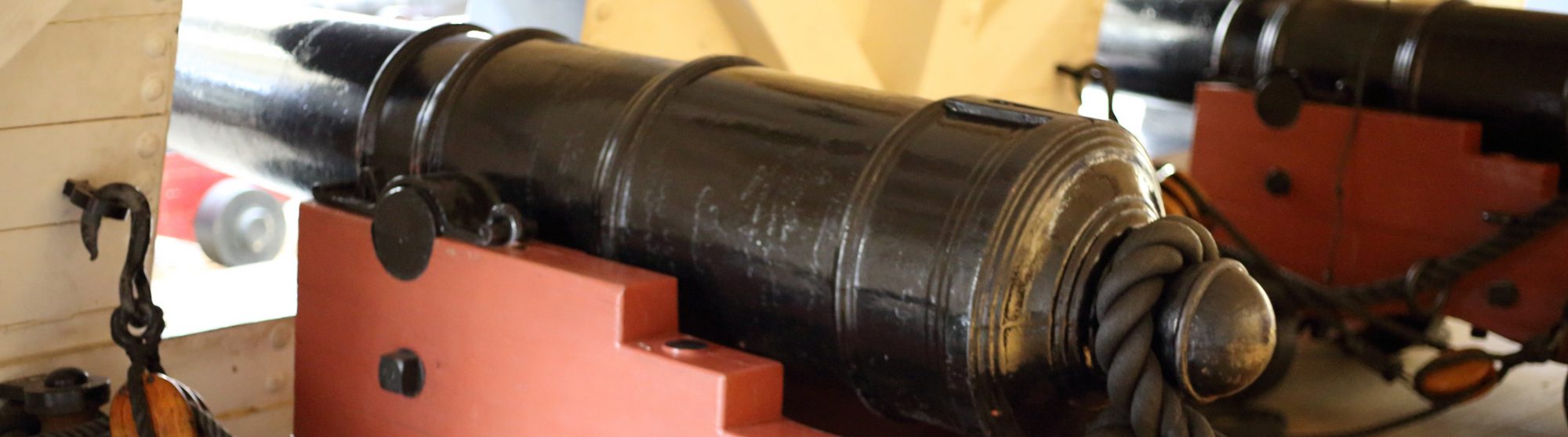
Battles of January 21 summaries plus museums, artwork, books

Battles of January 21 including descriptions of the battles, geographic locations, associated artwork, and museums where a person can find associated artifacts and artwork.

  1. Battle of Khe Sanh
    Date: January 21-July 9, 1968

War: Vietnam War

Cause: The People’s Army of Vietnam (PAVN) launched a massive artillery bombardment and ground siege against the U.S. Marine Corps combat base at Khe Sanh, aiming to seize the strategic location near the DMZ and divert U.S. attention before the Tet Offensive.

Result: Tactical U.S. victory; the base held out through the 77-day siege due to massive air support (Operation Niagara), though it was voluntarily abandoned by American forces shortly after the siege was lifted, making it a strategic subject of debate.

Paintings & Art Painting: Helmets at Que Sanh II (also known as Khe Sanh, Tet, Hue City) Artist: Colonel Peter Michael Gish

Year: 1976 (Approximate completion)

Museums & Artifacts

National Museum of the Marine Corps (Triangle, Virginia, USA): Features an immersive “Siege of Khe Sanh” exhibit where visitors walk through a CH-46 helicopter into a reconstructed bunker environment. Khe Sanh Victory Museum (Quảng Trị Province, Vietnam): Located at the former Ta Con Airfield, this open-air museum preserves original bunkers, aircraft, and trenches on the actual battlefield.

Location General: Khe Sanh Combat Base, Quảng Trị Province, Vietnam

Coordinates: 16.6554° N, 106.7286° E

Recommended Book

Valley of Decision: The Siege of Khe Sanh by John Prados and Ray W. Stubbe.

  1. British Capture of Tobruk

    Date: January 21, 1941 (Attack commenced; city fell Jan 22)

War: World War II (Western Desert Campaign)

Cause: As part of Operation Compass, British and Commonwealth forces (spearheaded by the Australian 6th Division) attacked the Italian-fortified port of Tobruk to secure a vital supply hub and drive Axis forces out of Cyrenaica (Libya).

Result: Decisive Allied victory; the port was captured along with over 25,000 Italian prisoners, securing the logistics needed to continue the advance west, though the town would later become famous for the subsequent siege.

Paintings & Art Painting: Central Square, Tobruk Artist: Ivor Hele

Year: 1941

Museums & Artifacts

Australian War Memorial (Canberra, Australia): Holds the cited painting by official war artist Ivor Hele, along with extensive diaries, uniforms, and weaponry from the “Rats of Tobruk.” Imperial War Museum (London, UK): Houses significant collections related to the Western Desert Campaign, including captured Italian equipment and British desert gear.

Location General: Tobruk, Libya

Coordinates: 32.0772° N, 23.9603° E

Recommended Book

Operation Compass 1940–41: Wavell’s Whirlwind Offensive by Jon Latimer.

  1. Third Battle of Dijon

    Date: January 21-23, 1871

War: Franco-Prussian War

Cause: The Prussian Army, seeking to protect the flank of their forces besieging Belfort, attacked the city of Dijon which was defended by the “Army of the Vosges”—a volunteer corps of French partisans and international volunteers commanded by the Italian revolutionary Giuseppe Garibaldi.

Result: French (Republican) victory; Garibaldi’s forces successfully repelled the Prussian attacks over three days and captured a German regimental flag, marking one of the few French successes in the war before the armistice.

Paintings & Art Painting: Garibaldi a Digione (Garibaldi in Dijon) Artist: Sebastiano De Albertis

Year: 1877

Museums & Artifacts

Museo del Risorgimento (Milan, Italy): Houses the painting by Sebastiano De Albertis and various artifacts belonging to Garibaldi and his volunteers. Musée de la Vie Bourguignonne (Dijon, France): Contains local history exhibits that cover the occupation and defense of Dijon during the war.

Location General: Dijon, France

Coordinates: 47.3220° N, 5.0415° E

Recommended Book

The Franco-Prussian War: The German Conquest of France in 1870-1871 by Geoffrey Wawro.

Books for sale

WarScholar Press

Contact Information

For more “Military History Inside Out” please follow me at www.warscholar.org, on Facebook at warscholar, on twitter at Warscholar, on youtube at warscholar1945 and on Instagram @crisalvarezswarscholar. Or subscribe to the podcast on Apple Podcasts | Google Podcasts | Stitcher | Spotify

Tags: military museum, military artwork, battles, Military History, War History, Battle Art, War Paintings, War Art, Military Art, Museum Visit, Art History, Historical Artifacts, Museum Collection, Battlefield Tours, History Museum, Museum Life, History In Art, Historic Preservation, January 21, On This Day, History, Military History, War History, Historical Events, History Buff, World History, Khe Sanh, Vietnam War, USMC, Tobruk, WWII, Operation Compass, Rats Of Tobruk, Battle Of Dijon, Franco Prussian War, Garibaldi

As an Amazon Associate I earn from qualifying purchases.
Military History Inside Out banner

Battles of December 22 summaries plus museums, artwork, and books

Battles of December 22 including descriptions of the battles, geographic locations, associated artwork, and museums where a person can find associated artifacts and artwork.

1. Siege of Ismail

Date: December 22, 1790 (New Style Calendar)

War: Russo-Turkish War (1787–1792)

Cause: The Russian Empire sought to secure control over the Black Sea and the Danube River. The fortress of Ismail (modern-day Izmail, Ukraine) was considered impregnable by the Ottoman Empire and was a key obstacle to the Russian advance.

Result: A decisive Russian victory. Under the command of General Alexander Suvorov, Russian forces stormed the fortress walls in a brutal assault. The capture of Ismail shocked the Ottoman Empire and European powers, leading to the Treaty of Jassy in 1792, which confirmed Russian dominance in the region.

Paintings & Art

  • Painting: The Capture of Ismail
    • Artist: Francesco Casanova
    • Year: c. 1791
  • Painting: Storming of the Fortress of Izmail (Etching/Engraving)
    • Artist: S. Shiflyar (after original drawings)
    • Year: Early 19th Century

Museums & Artifacts

  • State Russian Museum (St. Petersburg, Russia): Holds various artworks and portraits of Suvorov related to the campaigns.
  • Suvorov Museum (St. Petersburg, Russia): Dedicated entirely to the Generalissimo, containing weapons, trophies, and diagrams of the storming of Ismail.
  • Diorama of the Storming of Ismail (Izmail, Ukraine): A museum housed in a former mosque featuring a massive diorama depicting the assault.

Location

  • General: Izmail, Odesa Oblast, Ukraine
  • Coordinates: 45.3499° N, 28.8364° E

Recommended Book

2. Siege of Rhodes

Date: December 22, 1522 (Acceptance of Surrender Terms) (June 16 – December 22, 1522)

War: Ottoman–Hospitaller Wars

Cause: Sultan Suleiman the Magnificent aimed to eliminate the Knights Hospitaller (Knights of St. John) from Rhodes. The Knights used the island as a base for corsair activities against Ottoman shipping, disrupting trade and pilgrimage routes in the Eastern Mediterranean.

Result: Ottoman victory. After a bloody six-month siege, Grand Master Philippe Villiers de L’Isle-Adam accepted Suleiman’s terms of surrender on December 22. The Knights were allowed to leave the island with their weapons and religious icons, eventually relocating to Malta.

Paintings & Art

  • Painting: Siege of Rhodes (Miniature)
    • Artist: Matrakçı Nasuh (from the Süleymannâme)
    • Year: 1558
  • Painting: The Siege of Rhodes of 1522
    • Artist: Pat Nicolle (Historical Illustrator)
    • Year: 20th Century (Modern illustration often used in texts)

Museums & Artifacts

  • Palace of the Grand Master of the Knights of Rhodes (Rhodes, Greece): The original fortress and headquarters of the Knights, containing architecture and artifacts from the siege era.
  • Istanbul Naval Museum (Istanbul, Turkey): Houses Ottoman naval artifacts, maps, and weapons from the era of Suleiman the Magnificent.
  • Musée de l’Armée (Paris, France): Contains cannons and armor from the Knights Hospitaller.

Location

  • General: Rhodes (Old Town), Greece
  • Coordinates: 36.4457° N, 28.2240° E

Recommended Book

3. Battle of the Bulge (Siege of Bastogne)

Date: December 22, 1944 (December 20-26, 1944. Germans demand surrender on December 22)

War: World War II (Western Front)

Cause: As part of the massive German counteroffensive (Operation Wacht am Rhein), German forces surrounded the critical road junction town of Bastogne. On December 22, German envoys demanded the immediate surrender of the encircled American forces.

Result: American moral victory and continuation of the siege. Brigadier General Anthony McAuliffe famously replied to the German surrender demand with one word: “NUTS!” The 101st Airborne Division held the town despite heavy shelling and freezing conditions until relieved by General Patton’s Third Army days later.

Paintings & Art

  • Painting: Nuts!
    • Artist: Michael G. Nate
    • Year: 2000s (Contemporary Military Art)
  • Painting: Battle of the Bulge
    • Artist: H. Charles McBarron Jr.
    • Year: c. 1950s (U.S. Army Art Collection)

Museums & Artifacts

  • Bastogne War Museum (Bastogne, Belgium): The primary museum dedicated to the battle, featuring immersive exhibits and artifacts from the siege.
  • 101st Airborne Museum (Bastogne, Belgium): Located in the former officers’ mess building, focused specifically on the paratroopers’ defense.
  • National World War II Museum (New Orleans, USA): Contains extensive exhibits on the Ardennes Counteroffensive.

Location

  • General: Bastogne, Belgium
  • Coordinates: 50.0085° N, 5.7185° E

Recommended Book

4. Japanese Invasion of Lingayen Gulf

Date: December 22, 1941 (December 21-23, 1944. Landing on December 22)

War: World War II (Pacific Theater)

Cause: The Japanese Empire launched a major amphibious invasion of Luzon to capture Manila and eliminate American air and naval forces in the Philippines, securing the flank for their expansion into Southeast Asia.

Result: Japanese victory. The main Japanese 14th Army landed at Lingayen Gulf on December 22. Despite some resistance, the American and Filipino forces were outmaneuvered and forced to retreat toward the Bataan Peninsula, leading to the eventual fall of the Philippines.

Paintings & Art

  • Painting: Japanese Landing at Lingayen Gulf
    • Artist: U.S. Navy Combat Art Collection (Various Artists)
    • Year: c. 1942–1945
  • Painting: Defense of the Philippines (General Series)
    • Artist: Gary Zawadzki
    • Year: Late 20th Century

Museums & Artifacts

  • National Museum of the Pacific War (Fredericksburg, Texas): Comprehensive exhibits on the Pacific War, including the Philippines campaign.
  • Mt. Samat National Shrine (Bataan, Philippines): While focused on the later Bataan campaign, it holds artifacts related to the initial invasion.
  • Intramuros Administration (Manila, Philippines): Holds artifacts related to the defense of Luzon.

Location

  • General: Lingayen Gulf, Pangasinan, Philippines
  • Coordinates: 16.2833° N, 120.2333° E

Recommended Book

5. Battle of Iron Works Hill (Battle of Mount Holly)

Date: December 22, 1776 (Skirmishes began) (December 22-23, 1776)

War: American Revolutionary War

Cause: An American militia force under Colonel Samuel Griffin engaged Hessian troops to draw them away from their posts at Bordentown and Trenton. This was a diversionary effort to support George Washington’s planned crossing of the Delaware River.

Result: Strategic American success. The skirmishes on December 22 and 23 drew Colonel von Donop’s 2,000 Hessians south to Mount Holly. This left the Hessian garrison at Trenton unsupported, contributing to Washington’s stunning victory at the Battle of Trenton a few days later.

Paintings & Art

  • Painting: Washington Crossing the Delaware (Associated Context)
    • Artist: Emanuel Leutze
    • Year: 1851
  • Painting: Battle of Iron Works Hill (Local historical illustrations)
    • Artist: Unattributed/Local Historians
    • Year: Various

Museums & Artifacts

  • Old Barracks Museum (Trenton, New Jersey): Preserves the history of the Hessian occupation and the battles of Trenton and Princeton.
  • Armed Forces Heritage Museum (Wrightstown, New Jersey): Preserves the military history of New Jersey.
  • Museum of the American Revolution (Philadelphia, Pennsylvania): Holds artifacts related to the 1776 campaign.

Location

  • General: Mount Holly, New Jersey, USA
  • Coordinates: 39.9919° N, 74.7899° W

Recommended Book

Books for sale

WarScholar Press

Contact Information

For more “Military History Inside Out” please follow me at www.warscholar.org, on Facebook at warscholar, on twitter at Warscholar, on youtube at warscholar1945 and on Instagram @crisalvarezswarscholar. Or subscribe to the podcast on Apple Podcasts | Google Podcasts | Stitcher | Spotify

Tags: military museum, military artwork, battles, Military History, War History, Battle Art, War Paintings, War Art, Military Art, Museum Visit, Art History, Historical Artifacts, Museum Collection, Battlefield Tours, History Museum, Museum Life, History In Art, Historic Preservation December 21, On This Day, History, Military History, War History, Historical Events, History Buff, World History, Siege Of Ismail, Suvorov, Russo Turkish War, Siege Of Rhodes, Knights Hospitaller, Ottoman Empire, Battle Of The Bulge, Bastogne, Nuts, WWII, Pacific War, Lingayen Gulf, Revolutionary War, Iron Works Hill

As an Amazon Associate I earn from qualifying purchases.
Military History Inside Out banner

Battles of December 17 plus museums and artwork information

Battles of December 17 including descriptions of the battles, geographic locations, associated artwork, and museums where a person can find associated artifacts and artwork.

1. The Siege of Godesberg (1583)

Date: November 18 – December 17, 1583

War: Cologne War (1583–1588)

  • Description: A pivotal siege in the conflict between Protestant and Catholic factions for control of the Electorate of Cologne, a state of the Holy Roman Empire.
  • Cause: Gebhard Truchsess von Waldburg, the Prince-Elector of Cologne, converted to Calvinism and attempted to secularize the electorate, prompting a Catholic counter-force led by Ernest of Bavaria to intervene.
  • Result: Catholic Victory. On December 17, Bavarian forces successfully breached the walls of the Godesburg fortress using mines. The castle was stormed, and the defenders were defeated, securing a major stronghold for the Catholic faction.

Art & Museums

  • Painting/Artwork:
    • Siege of Godesberg (Engraving) by Frans Hogenberg (c. 1583). Hogenberg documented the Cologne War in a series of detailed engravings.
  • Museums with Artifacts:
    • Godesburg Fortress Ruins (Bad Godesberg, Bonn, Germany): The site itself serves as a monument, with preserved ruins and historical markers.
    • Rheinisches Landesmuseum (Bonn, Germany): Holds artifacts and documents from the Electorate of Cologne era.
  • Book: The Cologne War by various historians (often covered in general histories of the Holy Roman Empire, such as German Armies: War and German Politics, 1648-1806 by Peter H. Wilson).

Location

  • General: Bad Godesberg, Bonn, Germany.
  • Coordinates: 50.6844° N, 7.1517° E

2. The First Battle of Springfield (1776)

Date: December 17, 1776

War: American Revolutionary War

  • Description: A skirmish during the New Jersey campaign following the British capture of New York.
  • Cause: British and Hessian forces attempted to advance toward Morristown to crush Washington’s retreating army. New Jersey militia forces made a stand to delay them.
  • Result: Strategic American Success. The militia, though outmatched, harassed the British forces enough to delay their advance, buying crucial time for George Washington to regroup the Continental Army across the Delaware River (setting the stage for the Battle of Trenton).

Art & Museums

  • Painting/Artwork:
    • Battle of Connecticut Farms (Depicts the region and similar militia actions) by Larry Felder (Contemporary).
    • The Spirit of ’76 (General association) by Archibald Willard (c. 1875). While not of this specific battle, it captures the militia spirit of the NJ campaign.
  • Museums with Artifacts:
    • Caldwell Parsonage (Union, New Jersey): Features displays on the NJ battles of Springfield and Connecticut Farms.
    • Washington’s Headquarters Museum (Morristown, New Jersey): Holds extensive Revolutionary War artifacts relevant to the NJ campaign.
  • Book: The Forgotten Victory: The Battle for New Jersey – 1780 (Covers the strategic context of both Springfield battles) by Thomas Fleming.

George Washington’s Revenge: The 1777 New Jersey Campaign and How General Washington Turned Defeat into the Strategy That Won the Revolution by Arthur S. Lefkowitz

Location

  • General: Springfield, New Jersey, USA.
  • Coordinates: 40.7182° N, 74.3073° W

3. The Battle of the Mississinewa (1812)

Date: December 17-18, 1812

War: War of 1812

  • Description: An expedition by U.S. forces against the Miami Indian villages in the Indiana Territory.
  • Cause: In response to Native American attacks on Fort Wayne and Fort Harrison, General William Henry Harrison ordered Colonel John B. Campbell to destroy Miami villages to prevent them from supporting British forces.
  • Result: U.S. Victory. American troops destroyed several villages and inflicted casualties. However, a counterattack the next morning and severe frostbite among U.S. troops forced a retreat.

Art & Museums

Location

  • General: Near the Mississinewa River, Grant County, Indiana, USA.
  • Coordinates: 40.6789° N, 85.8111° W

4. Capture of Laguna de Terminos (1846)

Date: December 17, 1846

War: Mexican-American War

  • Description: A naval operation led by Commodore Matthew C. Perry to secure the Mexican Gulf coast.
  • Cause: The U.S. Navy sought to cut off supplies to central Mexico and control the logwood trade in the Yucatan peninsula.
  • Result: U.S. Victory. Perry captured the town of Carmen (Laguna de Terminos) without firing a shot, effectively occupying the island and securing a strategic port.

Art & Museums

  • Painting/Artwork:
    • Commodore Matthew C. Perry (Portrait) by William Sidney Mount (c. 1850s).
    • Naval Expedition to Tabasco (Lithograph illustrating the campaign) by Sarony & Major (1847).
  • Museums with Artifacts:
    • U.S. Naval Academy Museum (Annapolis, Maryland): Holds artifacts related to Commodore Perry and the Mexican War naval campaigns.
    • Naval History and Heritage Command (Washington, D.C.).
  • Book:

Location

  • General: Ciudad del Carmen, Campeche, Mexico.
  • Coordinates: 18.6323° N, 91.8385° W

5. First Battle of Artois (1914)

Date: December 17, 1914 – January 13, 1915

War: World War I

  • Description: A major offensive by the French Army intended to break the trench stalemate on the Western Front.
  • Cause: French General Joffre ordered attacks on the Lorette Spur and Vimy Ridge to relieve pressure on other fronts and seize high ground from the Germans.
  • Result: Indecisive / Stalemate. The offensive began on December 17 but bogged down due to mud, fog, and entrenched German machine guns. It resulted in heavy casualties for minor territorial gains.

Art & Museums

  • Painting/Artwork:
    • Algerian Spahis in Artois (Lithograph) by Charles Huard (1914). Depicts North African troops in the region during the early winter battles.
    • Battle of Artois (Lithograph from “Europe During the War” series) by Anonymous (c. 1920). Held by the Met Museum.
  • Museums with Artifacts:
    • Lens’ 14 – 18 Great War Museum (Souchez, France): Dedicated to the battles of Artois.
    • National WWI Museum and Memorial (Kansas City, Missouri): Holds artwork and artifacts from the Western Front.
  • Book: Pyrrhic Victory: French Strategy and Operations in the Great War by Robert A. Doughty.

Location

  • General: Artois region (near Lens and Arras), France.
  • Coordinates: 50.3980° N, 2.7180° E (Notre Dame de Lorette)

6. Battle of St. Vith (1944)

Date: Intensified December 17, 1944 (Part of the Battle of the Bulge) (December 16-21, 1944)

War: World War II

  • Description: A critical defensive battle where the U.S. 7th Armored Division held the town of St. Vith against the German Ardennes Offensive.
  • Cause: Hitler launched a massive surprise attack to split the Allied armies. St. Vith was a vital road junction needed for the German advance.
  • Result: U.S. Defensive Success (Tactical). Although the town eventually fell days later, the defense on December 17 choked the German advance, disrupting their timetable and preventing them from reaching the Meuse River on schedule.

Art & Museums

  • Painting/Artwork:
    • Battle for Monte in the Ardennes (Watercolor painted near the front) by Robert Noel Blair (1945).
    • Message Center, 101st Airborne Division (Watercolor) by Olin Dows (1945).
    • Hold to the Last Round (Depicts the 28th Division on Dec 16-17) by James Dietz (Contemporary).
  • Museums with Artifacts:
    • National Museum of Military History (Diekirch, Luxembourg): Renowned for its Battle of the Bulge collection.
    • Bastogne War Museum (Bastogne, Belgium).
    • Airborne & Special Operations Museum (Fayetteville, North Carolina).
  • Book: A Time for Trumpets: The Untold Story of the Battle of the Bulge by Charles B. MacDonald.

Location

  • General: St. Vith, Belgium.
  • Coordinates: 50.2803° N, 6.1264° E

Books for sale

WarScholar Press

Contact Information

For more “Military History Inside Out” please follow me at www.warscholar.org, on Facebook at warscholar, on twitter at Warscholar, on youtube at warscholar1945 and on Instagram @crisalvarezswarscholar. Or subscribe to the podcast on Apple Podcasts | Google Podcasts | Stitcher | Spotify

Tags: military museum, military artwork, battles, Military History, War History, Battle Art, War Paintings, War Art, Military Art, Museum Visit, Art History, Historical Artifacts, Museum Collection, Battlefield Tours, History Museum, December 17, On This Day, History, Military History, War History, Historical Events, History Buff, World History, Battle Of The Bulge, WWII, WWI, War Of 1812, Revolutionary War, St Vith, Artois 1914, Cologne War, Commodore Perry, Siege Warfare

As an Amazon Associate I earn from qualifying purchases.

Military History Inside Out banner