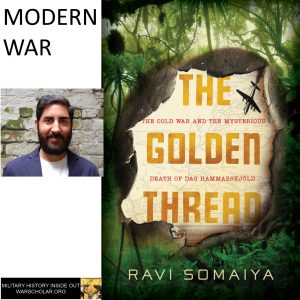
How did a top United Nations official end up dying in the forests of Africa with Ravi Somaiya

Ravi Somaiya Golden Thread

How did a top United Nations official end up dying in the forests of Africa with Ravi Somaiya

Check out this book here   https://amzn.to/2ICsBM4

Interview Timeline

Ravi Somaiya has been a journalist for the New York Times and has written for many other major publications. He has also produced documentaries on major news topics. He recently published a book about the mysterious 1961 death of the top UN official during the Congo Civil War. We spoke about the book, his research, and the many players involved in this mystery. “The Golden Thread” (Twelve, 2020)

(THE AUDIO PLAYER IS AT THE BOTTOM OF THE POST.)

0:42 – Ravi talks about the Congo Civil War and how it was tied into the Cold War.

2:09 – Ravi talks about why he wrote on the war.

3:06 – Ravi provides details on when the civil happened and what it was about.

3:39 – Ravi talks about what additional info on the civil war Ravi includes in his book.

5:07 – Ravi talks about the UN’s role in this war.

6:15 – Ravi talks about the Katanga secession.

7:31 – Ravi talks about the white supremacists who got involved in the war.

9:02 – Ravi talks about US and Soviet uranium interests in the war.

11:41 – Ravi talks about the huge number of organizations involved in this war.

14:09 – Ravi talks about the safety of the UN in the Congo.

15:27 – Ravi talks about the international feel of Leopoldville.

16:35 – Ravi talks about the sizes of the forces who fought in the war.

17:49 – Ravi talks about the weaponry used in the war.

18:44 – Ravi talks about the massacres during the war.

19:49 – Ravi talks about the visibility of the war to the general public.

21:43 – Ravi talks about the WWII Axis veterans who joined this war.

23:29 – Ravi talks about mercenaries and soldiers of fortune in this war.

24:27 – Ravi talks about the UN’s goals.

25:23 – Ravi talks about Dag’s worry about his safety.

27:09 – Ravi talks about Katanga’s argument for independence.

27:58 – Ravi talks about the goals of the book.

29:47 – Ravi talks about his research.

31:17 – Ravi talks about using the UN archive.

32:02 – Ravi talks about some of the interviews he did.

37:55 – Ravi talks about access to Russian accidents.

39:02 – Ravi talks more about a South African mercenary agency and South African intelligence.

41:24 – Ravi talks about the Soviet allies in this war.

42:15 – Ravi talks about far past Dag’s death the book goes.

45:04 – Ravi talks about WWII.

49:49 – Ravi can be found on twitter @ravisomaiya and at ravisomaiya.com

Links of interest

https://amzn.to/2ICsBM4

https://www.twelvebooks.com/titles/ravi-somaiya/the-golden-thread/9781549175886/

https://www.ravisomaiya.com/

https://twitter.com/ravisomaiya

Contact Information

For more “Military History Inside Out” please follow me at www.warscholar.org, on Facebook at warscholar, on twitter at Warscholar, on youtube at warscholar and on Instagram @crisalvarezwarscholar. Or subscribe to the podcast on Apple Podcasts | Google Podcasts | Stitcher | Spotify Please see historyrabbithole.com for a list of my dozen or so blogs and podcasts. You’re sure to find something you like.

Guests: Ravi Somaiya

Host: Cris Alvarez

Tags: Books, audio interviews, author, podcast, Twelve, Modern War, United States, Germany, Russia, Britain,

Check out this book here   https://amzn.to/2ICsBM4

As an Amazon Associate I earn from qualifying purchases.

Military History Inside Out banner


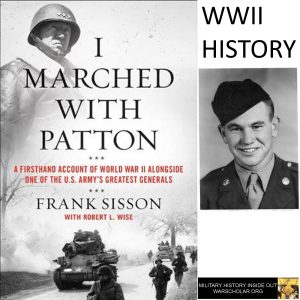
Frank Sisson and Robert Wise talk about their WWII military history book “I Marched With Patton” (William Morrow, 2020)

Frank Sisson Robert Wise WWII

Frank Sisson and Robert Wise talk about the WWII military history book “I Marched With Patton”

Check out this book here   https://amzn.to/3lQUOwO

Interview Summary

Frank Sisson joined the US Army in 1943 at the age of 18. He went into the artillery and fought in Europe alongside Patton’s forces. He wrote his memoir with Robert Wise and I spoke to them about Frank’s wartime experiences from Texas, to France, and finally on to Berlin where he ended his Army days working as a military policeman.

(THE AUDIO PLAYER IS AT THE BOTTOM OF THE POST.)

1:08 – Frank and Robert talk about how the book was written.

2:02 – Frank talks about why he eventually agreed to writing a book on his time in WWII.

2:45 – Frank talks about how he joined the military when he turned 18.

3:51 – Frank talks about joining the artillery.

5:03 – Frank talks about what he was doing when Pearl Harbor was bombed and how people felt about the war.

6:12 – Frank talks about training at Fort Sill and in Texas and then going to Europe.

7:24 – Frank talks not wanting to live on the ocean.

(NOTE: 8:06: The audio was temporarily static y.)

8:06 – Frank talks about his time in the artillery.

9:57 – (Audio issues end): Frank talks about how nervous it was going to war.

11:23 – Frank talks about landing in Saint Lo France.

14:09 – Frank talks about his feelings about the Nazis. He also talks about

speaking French and German.

16:13 – Frank talks about being in the Ardennes Forest. He saw Patton, Bradley, and Eisenhower there.

19:45 – Frank talks about doing their work in freezing temperatures.

23:00 – Frank talks about an experience on the Rhine river being attacked by black jet airplanes.

25:21 – Frank talks about crossing the Rhine.

25:26 – Frank talks about being a policeman in Berlin and dealing with the Russians. He mentions an event where he had to arrest a drunken Russian general and his drunken driver.

30:28 – Frank talks about hearing a profanity laced speech from Patton. He also discusses his own truck driver.

33:41 – Frank talks about being in Berlin after the German surrender.

34:40 – Frank talks about seeing Jewish prisoners of war being moved.

36:12 – Frank talks about how he became a police officer. He talks about a grisly discovery he made at the morgue.

40:32 – Frank talks about getting along with his officer supervisor in the military police.

41:24 – Frank talks about enjoying hearing the artillery guns going.

42:36 – Frank talks about being the boss in the military police and that he liked Berlin.

44:42 – Frank talks about war souvenirs.

Links of interest

https://amzn.to/3lQUOwO

https://www.harpercollins.com/products/i-marched-with-patton-frank-sissonrobert-l-wise?variant=32117507555362

Thilde Kold Holdt and her Viking fantasy novel on Full Contact Nerd https://wp.me/p7CDU9-4YM

Bill Ayrey and Apollo 11 spacesuits on Technology and Space http://spacewalksmoneytalks.com/p/599

Contact Information

For more “Military History Inside Out” please follow me at www.warscholar.org, on Facebook at warscholar, on twitter at Warscholar, on youtube at warscholar and on Instagram @crisalvarezwarscholar. Or subscribe to the podcast on Apple Podcasts | Google Podcasts | Stitcher | Spotify Please see historyrabbithole.com for a list of my dozen or so blogs and podcasts. You’re sure to find something you like.

Guests: Frank Sisson and Robert Wise

Host: Cris Alvarez

Tags: Books, audio interviews, author, podcast, William Morrow, WWII, United States, Germany, Russia, France,

Check out this book here   https://amzn.to/3lQUOwO

As an Amazon Associate I earn from qualifying purchases.
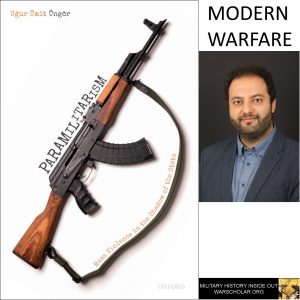
Ugur Ungor discusses paramilitaries in his military history book Paramilitarism (Oxford University Press, 2020)


Ugur Ungor discusses paramilitarism
Ugur Ungar Paramilitarism

Ugur Ungor discusses Paramilitarism

Check out this book here   https://amzn.to/3ivil4q

Interview Summary

Ugur Umit Ungor is a professor of Holocaust and Genocide Studies and has researched paramilitarism for years and has recently published a book on the topic. We discussed the book and the various paramilitaries that have formed in the twentieth century and the problems they have caused both for their victims and for the states that have created them.

(THE AUDIO PLAYER IS AT THE BOTTOM OF THE POST.)

0:42 – Ugur talks about how he started writing about paramilitary groups.

2:47 – Ugur talks about the regions and time periods the book covers.

0:41 – Ugur talks about how he started writing about paramilitary groups.

2:42 – Ugur talks about the regions and time periods the book covers.

5:18 – Ugur talks about what paramilitarism is and their relationship to states.

7:31 – Ugur talks about the ties between organized crime, paramilitaries, and states.

11:05 – Ugur talks about the extent that authoritarian regimes use paramilitaries.

14:07 – Ugur talks about being surprised that Stalin didn’t use paramilitaries.

15:28 – Ugur talks about being surprised that Indonesia used paramilitaries in the 1960s.

16:24 – Ugur talks about the internal structures and development of these groups.

18:34 – Ugur talks about paramilitary groups who fought outside of their countries.

20:38 – Ugur talks about why these groups are considered military rather than para police 23:50 – Ugur talks about how many military and law enforcement men were in paramilitary groups too.

26:09 – Ugur talks about insurgencies and the creation of paramilitaries.

29:58 – Ugur talks about the popularity of these groups in some parts of their society.

34:06 – Ugur talks about how most of the victims of paramilitaries were poor people.

36:19 – Ugur talks about the violent methods the paramilitaries used.

38:06 – Ugur talks about paramilitary membership.

40:48 – Ugur talks about the dangers or lack of that these paramilitaries faced.

42:22 – Ugur talks about how states disbanded paramilitary groups.

46:30 – Ugur talks about the power of the state over its paramilitaries.

47:55 – Ugur talks about how paramilitaries gain political and social status they didn’t have before.

48:24 – Ugur talks about the Syrian paramilitaries being the most violent he came across.

50:52 – Ugur talks about globalism and paramilitaries.

53:39 – Ugur talks about how he did his research.

56:05 – Ugur talks being surprised about how much paramilitaries figured in US history.

58:19 – Ugur talks about paramilitary false flag operations in Ireland.

1:00:39 – Ugur talks about wanting to know more about Slobodan Milosevic and his connection with paramilitaries.  He also talks about a November 1996 car crash in Turkey that involved a Turkish parliamentarian and Kurdish, the head of the Turkish police, and the top mob boss in Turkey at the time.

1:04:14 – Ugur talks about how these paramilitaries affect public perception of their governments and violence.

1:09:18 – Ugur is at Ungor.nl and on twitter @ugurumitungor.

Links of interest

https://amzn.to/3ivil4q

https://global.oup.com/academic/product/paramilitarism-9780198825241?cc=us&lang=en&

https://www.niod.nl/en/staff/ugur-%c3%bcng%c3%b6r

https://twitter.com/ugur_umit_ungor

Contact Information

For more “Military History Inside Out” please follow me at www.warscholar.org, on Facebook at warscholar, on twitter at Warscholar, on youtube at warscholar and on Instagram @crisalvarezwarscholar. Or subscribe to the podcast on Apple Podcasts | Google Podcasts | Stitcher | Spotify Please see historyrabbithole.com for a list of my dozen or so blogs and podcasts. You’re sure to find something you like.

Guests: Ugur Umit Ungor

Host: Cris Alvarez

Check out this book here   https://amzn.to/3ivil4q

As an Amazon Associate I earn from qualifying purchases.
Military History Inside Out banner