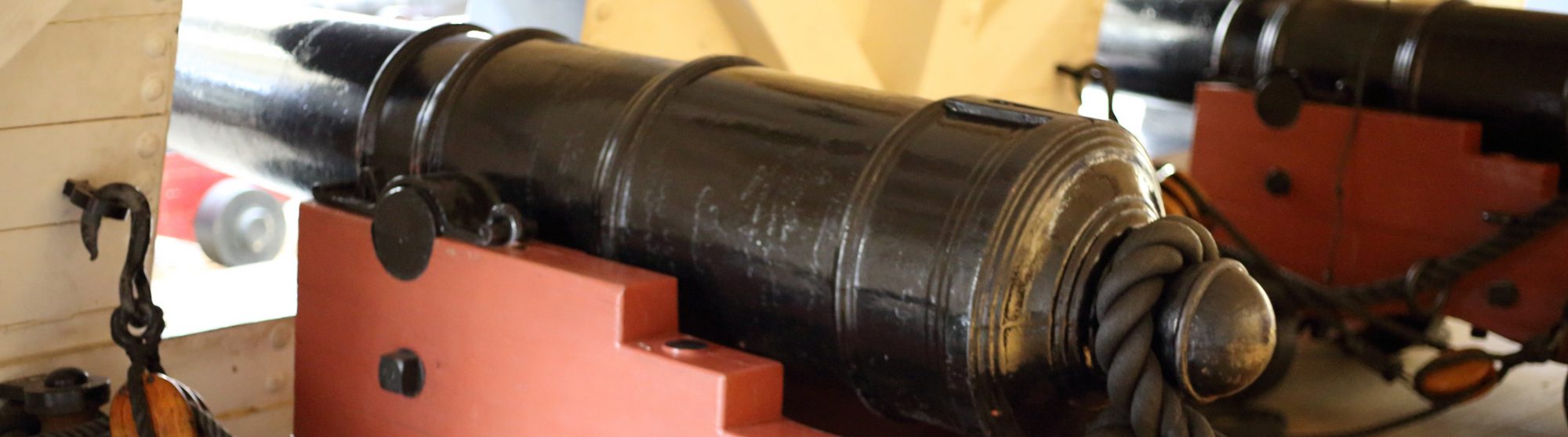
Battles of December 22 summaries plus museums, artwork, and books

Battles of December 22 including descriptions of the battles, geographic locations, associated artwork, and museums where a person can find associated artifacts and artwork.

1. Siege of Ismail

Date: December 22, 1790 (New Style Calendar)

War: Russo-Turkish War (1787–1792)

Cause: The Russian Empire sought to secure control over the Black Sea and the Danube River. The fortress of Ismail (modern-day Izmail, Ukraine) was considered impregnable by the Ottoman Empire and was a key obstacle to the Russian advance.

Result: A decisive Russian victory. Under the command of General Alexander Suvorov, Russian forces stormed the fortress walls in a brutal assault. The capture of Ismail shocked the Ottoman Empire and European powers, leading to the Treaty of Jassy in 1792, which confirmed Russian dominance in the region.

Paintings & Art

  • Painting: The Capture of Ismail
    • Artist: Francesco Casanova
    • Year: c. 1791
  • Painting: Storming of the Fortress of Izmail (Etching/Engraving)
    • Artist: S. Shiflyar (after original drawings)
    • Year: Early 19th Century

Museums & Artifacts

  • State Russian Museum (St. Petersburg, Russia): Holds various artworks and portraits of Suvorov related to the campaigns.
  • Suvorov Museum (St. Petersburg, Russia): Dedicated entirely to the Generalissimo, containing weapons, trophies, and diagrams of the storming of Ismail.
  • Diorama of the Storming of Ismail (Izmail, Ukraine): A museum housed in a former mosque featuring a massive diorama depicting the assault.

Location

  • General: Izmail, Odesa Oblast, Ukraine
  • Coordinates: 45.3499° N, 28.8364° E

Recommended Book

2. Siege of Rhodes

Date: December 22, 1522 (Acceptance of Surrender Terms) (June 16 – December 22, 1522)

War: Ottoman–Hospitaller Wars

Cause: Sultan Suleiman the Magnificent aimed to eliminate the Knights Hospitaller (Knights of St. John) from Rhodes. The Knights used the island as a base for corsair activities against Ottoman shipping, disrupting trade and pilgrimage routes in the Eastern Mediterranean.

Result: Ottoman victory. After a bloody six-month siege, Grand Master Philippe Villiers de L’Isle-Adam accepted Suleiman’s terms of surrender on December 22. The Knights were allowed to leave the island with their weapons and religious icons, eventually relocating to Malta.

Paintings & Art

  • Painting: Siege of Rhodes (Miniature)
    • Artist: Matrakçı Nasuh (from the Süleymannâme)
    • Year: 1558
  • Painting: The Siege of Rhodes of 1522
    • Artist: Pat Nicolle (Historical Illustrator)
    • Year: 20th Century (Modern illustration often used in texts)

Museums & Artifacts

  • Palace of the Grand Master of the Knights of Rhodes (Rhodes, Greece): The original fortress and headquarters of the Knights, containing architecture and artifacts from the siege era.
  • Istanbul Naval Museum (Istanbul, Turkey): Houses Ottoman naval artifacts, maps, and weapons from the era of Suleiman the Magnificent.
  • Musée de l’Armée (Paris, France): Contains cannons and armor from the Knights Hospitaller.

Location

  • General: Rhodes (Old Town), Greece
  • Coordinates: 36.4457° N, 28.2240° E

Recommended Book

3. Battle of the Bulge (Siege of Bastogne)

Date: December 22, 1944 (December 20-26, 1944. Germans demand surrender on December 22)

War: World War II (Western Front)

Cause: As part of the massive German counteroffensive (Operation Wacht am Rhein), German forces surrounded the critical road junction town of Bastogne. On December 22, German envoys demanded the immediate surrender of the encircled American forces.

Result: American moral victory and continuation of the siege. Brigadier General Anthony McAuliffe famously replied to the German surrender demand with one word: “NUTS!” The 101st Airborne Division held the town despite heavy shelling and freezing conditions until relieved by General Patton’s Third Army days later.

Paintings & Art

  • Painting: Nuts!
    • Artist: Michael G. Nate
    • Year: 2000s (Contemporary Military Art)
  • Painting: Battle of the Bulge
    • Artist: H. Charles McBarron Jr.
    • Year: c. 1950s (U.S. Army Art Collection)

Museums & Artifacts

  • Bastogne War Museum (Bastogne, Belgium): The primary museum dedicated to the battle, featuring immersive exhibits and artifacts from the siege.
  • 101st Airborne Museum (Bastogne, Belgium): Located in the former officers’ mess building, focused specifically on the paratroopers’ defense.
  • National World War II Museum (New Orleans, USA): Contains extensive exhibits on the Ardennes Counteroffensive.

Location

  • General: Bastogne, Belgium
  • Coordinates: 50.0085° N, 5.7185° E

Recommended Book

4. Japanese Invasion of Lingayen Gulf

Date: December 22, 1941 (December 21-23, 1944. Landing on December 22)

War: World War II (Pacific Theater)

Cause: The Japanese Empire launched a major amphibious invasion of Luzon to capture Manila and eliminate American air and naval forces in the Philippines, securing the flank for their expansion into Southeast Asia.

Result: Japanese victory. The main Japanese 14th Army landed at Lingayen Gulf on December 22. Despite some resistance, the American and Filipino forces were outmaneuvered and forced to retreat toward the Bataan Peninsula, leading to the eventual fall of the Philippines.

Paintings & Art

  • Painting: Japanese Landing at Lingayen Gulf
    • Artist: U.S. Navy Combat Art Collection (Various Artists)
    • Year: c. 1942–1945
  • Painting: Defense of the Philippines (General Series)
    • Artist: Gary Zawadzki
    • Year: Late 20th Century

Museums & Artifacts

  • National Museum of the Pacific War (Fredericksburg, Texas): Comprehensive exhibits on the Pacific War, including the Philippines campaign.
  • Mt. Samat National Shrine (Bataan, Philippines): While focused on the later Bataan campaign, it holds artifacts related to the initial invasion.
  • Intramuros Administration (Manila, Philippines): Holds artifacts related to the defense of Luzon.

Location

  • General: Lingayen Gulf, Pangasinan, Philippines
  • Coordinates: 16.2833° N, 120.2333° E

Recommended Book

5. Battle of Iron Works Hill (Battle of Mount Holly)

Date: December 22, 1776 (Skirmishes began) (December 22-23, 1776)

War: American Revolutionary War

Cause: An American militia force under Colonel Samuel Griffin engaged Hessian troops to draw them away from their posts at Bordentown and Trenton. This was a diversionary effort to support George Washington’s planned crossing of the Delaware River.

Result: Strategic American success. The skirmishes on December 22 and 23 drew Colonel von Donop’s 2,000 Hessians south to Mount Holly. This left the Hessian garrison at Trenton unsupported, contributing to Washington’s stunning victory at the Battle of Trenton a few days later.

Paintings & Art

  • Painting: Washington Crossing the Delaware (Associated Context)
    • Artist: Emanuel Leutze
    • Year: 1851
  • Painting: Battle of Iron Works Hill (Local historical illustrations)
    • Artist: Unattributed/Local Historians
    • Year: Various

Museums & Artifacts

  • Old Barracks Museum (Trenton, New Jersey): Preserves the history of the Hessian occupation and the battles of Trenton and Princeton.
  • Armed Forces Heritage Museum (Wrightstown, New Jersey): Preserves the military history of New Jersey.
  • Museum of the American Revolution (Philadelphia, Pennsylvania): Holds artifacts related to the 1776 campaign.

Location

  • General: Mount Holly, New Jersey, USA
  • Coordinates: 39.9919° N, 74.7899° W

Recommended Book

Books for sale

WarScholar Press

Contact Information

For more “Military History Inside Out” please follow me at www.warscholar.org, on Facebook at warscholar, on twitter at Warscholar, on youtube at warscholar1945 and on Instagram @crisalvarezswarscholar. Or subscribe to the podcast on Apple Podcasts | Google Podcasts | Stitcher | Spotify

Tags: military museum, military artwork, battles, Military History, War History, Battle Art, War Paintings, War Art, Military Art, Museum Visit, Art History, Historical Artifacts, Museum Collection, Battlefield Tours, History Museum, Museum Life, History In Art, Historic Preservation December 21, On This Day, History, Military History, War History, Historical Events, History Buff, World History, Siege Of Ismail, Suvorov, Russo Turkish War, Siege Of Rhodes, Knights Hospitaller, Ottoman Empire, Battle Of The Bulge, Bastogne, Nuts, WWII, Pacific War, Lingayen Gulf, Revolutionary War, Iron Works Hill

As an Amazon Associate I earn from qualifying purchases.
Military History Inside Out banner

Battles of December 21 summaries plus museums, artwork, and books

Battles of December 21 including descriptions of the battles, geographic locations, associated artwork, and museums where a person can find associated artifacts and artwork.

1. The Fetterman Fight (The Fetterman Massacre)

Date: December 21, 1866

War: Red Cloud’s War

Cause: Tensions rose in the Dakota Territory as the U.S. Army built forts along the Bozeman Trail, trespassing on treaty-guaranteed Lakota hunting grounds. On December 21, a wood train near Fort Phil Kearny was attacked. Captain William J. Fetterman was sent to relieve the train with explicit orders not to pursue the Native American warriors over Lodge Trail Ridge. Disobeying command, Fetterman took the bait of a decoy party led by Crazy Horse and crossed the ridge into a massive ambush.

Result: It was a total victory for the coalition of Lakota, Cheyenne, and Arapaho forces. The entire U.S. detachment of 81 men was wiped out in roughly 30 minutes. It remained the worst defeat of the U.S. Army on the Great Plains until the Battle of the Little Bighorn ten years later.

Paintings & Art

Painting: The Fetterman Fight

  • Artist: J.K. Ralston
  • Year: 1963
  • Note: This large-scale oil painting is considered one of the most historically accurate depictions of the topography and combat of the event.

Painting: After the Fetterman Fight

  • Artist: Z.S. Liang
  • Year: 2008

Museums & Artifacts

Fort Phil Kearny State Historic Site (Banner, Wyoming, USA): Located at the actual site of the fort and near the battlefield, this museum houses an interpretative center with artifacts from the battle, weapons from the era, and detailed dioramas.

National Museum of the American Indian (Washington, D.C., USA): Contains vast collections of Plains Indian artifacts, including items from the Lakota and Cheyenne tribes relevant to the period of Red Cloud’s War.

Location

General: Near Story and Banner, Johnson County, Wyoming, USA.

Coordinates: 44°34′18″N 106°50′50″W

Recommended Book

The Fetterman Massacre by Dee Brown.

2. The Battle of Konya

Date: December 21, 1832

War: First Egyptian-Ottoman War

Cause: Muhammad Ali, the rebellious Khedive of Egypt, demanded control of Greater Syria as a reward for his assistance to the Ottoman Empire during the Greek War of Independence. When Sultan Mahmud II refused, Muhammad Ali sent his son, Ibrahim Pasha, to invade Ottoman Syria and Anatolia. The Ottoman Grand Vizier, Reshid Mehmed Pasha, was sent to stop the Egyptian advance deep within modern-day Turkey.

Result: The battle was a decisive victory for the Egyptian forces. Despite being outnumbered, Ibrahim Pasha’s disciplined modernized army routed the Ottomans. The Grand Vizier was captured, and the path to Constantinople (Istanbul) was left virtually undefended, marking a low point in Ottoman power and forcing the Empire to seek Russian aid.

Paintings & Art

Painting: Portrait of Ibrahim Pasha (The Egyptian Commander)

  • Artist: Jean-François Portaels
  • Year: Approx. 1847
  • Note: While contemporary battle scenes are rare in Western art, portraits of the victorious commander Ibrahim Pasha from this era are held in high regard for depicting the uniform and demeanor of the Egyptian leadership.

Painting: Mahmud II (The Ottoman Sultan)

  • Artist: Unknown (School of Art in Constantinople)
  • Year: Early 19th Century

Museums & Artifacts

Harbiye Military Museum (Istanbul, Turkey): One of the leading military museums in the world, it holds extensive collections of Ottoman weaponry, uniforms, and tents from the 19th century, including items from the reforms of Mahmud II.

Topkapi Palace Museum (Istanbul, Turkey): Houses the imperial treasury and archives, including firmans (edicts) and personal items belonging to Sultan Mahmud II.

Location

General: Just outside the city of Konya, Central Anatolia, Turkey.

Coordinates: 37°52′00″N 32°29′00″E

Recommended Book

Osman’s Dream: The History of the Ottoman Empire by Caroline Finkel.

3. The Capture of Savannah (Culmination of the March to the Sea)

Date: December 21, 1864

War: American Civil War

Cause: Union General William Tecumseh Sherman undertook his famous “March to the Sea” from Atlanta to the Atlantic coast to destroy the Confederacy’s economic and psychological capacity to wage war. Upon reaching Savannah, Sherman besieged the city. The Confederate commander, General William J. Hardee, realized he would be encircled and escaped across the Savannah River on December 20.

Result: On December 21, Savannah Mayor Richard Arnold surrendered the city to Union forces. Sherman occupied the city and famously telegraphed President Abraham Lincoln, offering the city of Savannah as a “Christmas gift.”

Paintings & Art

Painting: Sherman’s March to the Sea

  • Artist: F.O.C. Darley
  • Year: 1868
  • Note: A famous engraving and print series that depicts the movement of Sherman’s army through Georgia, often used to visualize the campaign that ended in Savannah.

Painting: General Sherman at Savannah

  • Artist: Various 19th Century Illustrators (Harper’s Weekly)
  • Year: 1864-1865

Museums & Artifacts

Savannah History Museum (Savannah, Georgia, USA): Located in the historic Central of Georgia Railway passenger shed, this museum features exhibits on the Civil War and the occupation of the city.

Georgia Historical Society (Savannah, Georgia, USA): Holds the oldest collection of Georgia history, including manuscripts, maps, and artifacts directly related to Sherman’s occupation.

Location

General: Savannah, Chatham County, Georgia, USA.

Coordinates: 32°04′52″N 81°05′28″W

Recommended Book

Southern Storm: Sherman’s March to the Sea by Noah Andre Trudeau.

Books for sale

WarScholar Press

Contact Information

For more “Military History Inside Out” please follow me at www.warscholar.org, on Facebook at warscholar, on twitter at Warscholar, on youtube at warscholar1945 and on Instagram @crisalvarezswarscholar. Or subscribe to the podcast on Apple Podcasts | Google Podcasts | Stitcher | Spotify

Tags: military museum, military artwork, battles, Military History, War History, Battle Art, War Paintings, War Art, Military Art, Museum Visit, Art History, Historical Artifacts, Museum Collection, Battlefield Tours, History Museum, Museum Life, History In Art, Historic Preservation December 20, On This Day, History, Military History, War History, Historical Events, History Buff, World History, Fetterman Fight, Red Clouds War, Lakota History, Bozeman Trail, Battle Of Konya, Ottoman Empire, Egyptian History, Ibrahim Pasha, Capture Of Savannah, Shermans March, Civil War History, Civil War, General Sherman

As an Amazon Associate I earn from qualifying purchases.
Military History Inside Out banner

Battles of December 20 plus museums and artwork information

Battles of December 20 including descriptions of the battles, geographic locations, associated artwork, and museums where a person can find associated artifacts and artwork.

1. Battle of Dranesville

Date: December 20, 1861

War: American Civil War

Cause: Following the Union disaster at Ball’s Bluff, tensions were high in Northern Virginia. Both Union and Confederate forces sent out foraging parties on the same day to gather hay and supplies from farms between their lines. The escorts for these wagons collided near the village of Dranesville.

Result: Union Victory. Union Brigadier General E.O.C. Ord’s forces arrived first and established a strong position. When Confederate J.E.B. Stuart attacked, he was repulsed by superior Union artillery and infantry fire. The victory provided a much-needed morale boost for the North during a winter of stagnation.

Paintings & Art

Painting: Battle at Dranesville, Va. Decr. 20th, 1861 (Map/Watercolor)

  • Artist: Robert Knox Sneden
  • Year: c. 1861–1865

Painting: The Battle of Dranesville (Engraving)

  • Artist: Harper’s Weekly Staff (Sketch by an officer on the field)
  • Year: 1862

Museums & Artifacts

Virginia Museum of the Civil War (New Market, Virginia, USA): While focused on the later Battle of New Market, this museum serves as a central hub for Civil War history in Virginia, holding varied artifacts from the campaigns in the region.

Virginia Historical Society / Virginia Museum of History & Culture (Richmond, Virginia, USA): Holds the “Sneden Scrapbook,” a massive collection of Civil War watercolors and maps by soldier-artist Robert Knox Sneden, including his depiction of Dranesville.

Location

General: Dranesville, Virginia, USA (Modern-day intersection of Route 7 and Route 193). Coordinates: 39.0044° N, 77.3377° W

Recommended Book Dranesville: A Northern Virginia Town in the Crossfire of a Forgotten Battle, December 20, 1861 by Ryan T. Quint.


2. Battle of Holly Springs (Van Dorn’s Raid)

Date: December 20, 1862

War: American Civil War

Cause: Union General Ulysses S. Grant was advancing toward Vicksburg, Mississippi, using Holly Springs as his primary supply depot. Recognizing the vulnerability of Grant’s long supply line, Confederate General Earl Van Dorn launched a daring cavalry raid behind Union lines to destroy these supplies.

Result: Confederate Victory. Van Dorn’s troopers caught the Union garrison by surprise, capturing the town and burning millions of dollars worth of food, forage, and munitions. The destruction forced Grant to abandon his overland advance on Vicksburg and retreat to Memphis, delaying the fall of Vicksburg by months.

Paintings & Art

Painting: The Raid on Holly Springs (Engraving)

  • Artist: Alexander Simplot (attrib. for Harper’s Weekly)
  • Year: 1863

Painting: Earl Van Dorn (Carte de visite / Photograph)

  • Artist: Vannerson & Jones (Photographers)
  • Year: c. 1861–1863

Museums & Artifacts

Marshall County Historical Museum (Holly Springs, Mississippi, USA): Located in the historic town itself, this museum houses an extensive collection of Civil War artifacts related to the raid, including weaponry, uniforms, and local accounts of the destruction.

Mississippi Civil Rights Museum & Museum of Mississippi History (Jackson, Mississippi, USA): Provides broader context on the Civil War in Mississippi and the impact of military campaigns on both soldier and civilian populations in the state.

Location

General: Holly Springs, Mississippi, USA.

Coordinates: 34.7675° N, 89.4486° W

Recommended Book Holly Springs: Van Dorn, the CSS Arkansas and the Raid That Saved Vicksburg by Brandon H. Beck.


3. First Battle of Champagne (Start of Offensive)

Date: December 20, 1914

War: World War I

Cause: Following the “Race to the Sea” which established the trench lines of the Western Front, the French army launched its first major offensive in the Champagne region. The goal was to break the German line, seize the railway junction at Attigny, and force a German retreat.

Result: Inconclusive / Strategic Failure. The offensive, which began on December 20, resulted in minor tactical gains but failed to break the German lines. It devolved into a war of attrition with heavy casualties on both sides, setting the grim tone for trench warfare in the years to follow.

Paintings & Art

Painting: Fighting in Champagne (Sketch/Painting)

  • Artist: Leon Broquet
  • Year: c. 1914–1918

Painting: Verdun (Associated War Artist for the region)

  • Artist: Félix Vallotton
  • Year: 1917

Museums & Artifacts

Musée de l’Armée (Paris, France): Located at Les Invalides, this is one of the world’s premier military museums, holding vast collections of WWI uniforms, weapons, and artwork, including works by artists commissioned to paint the Champagne front.

La Contemporaine (Nanterre, France): A library and museum specializing in 20th-century history, holding a significant collection of sketches, paintings, and posters from the First World War.

Location

General: Perthes-lès-Hurlus (near Souain-Perthes-lès-Hurlus), Grand Est, France.

Coordinates: 49.1833° N, 4.5500° E

Recommended Book The French Army in the First World War by Elizabeth Greenhalgh.


4. Invasion of Panama (Operation Just Cause)

Date: December 20, 1989

War: United States Invasion of Panama

Cause: Tensions between the U.S. and Panamanian dictator Manuel Noriega reached a breaking point due to drug trafficking indictments, harassment of U.S. personnel, and the killing of a U.S. Marine. President George H.W. Bush ordered the invasion to protect American lives, restore democracy, and seize Noriega.

Result: United States Victory. U.S. forces quickly overwhelmed the Panamanian Defense Forces (PDF). Key targets, including the Comandancia (PDF Headquarters) in the El Chorrillo neighborhood, were seized. Noriega eventually surrendered, and the PDF was dissolved.

Paintings & Art

Painting: El Chorrillo, December 20, 1989 (Mural/Acrylic on Canvas)

  • Artist: Aristides Ureña Ramos
  • Year: 2021

Painting: ManiObras (Series created during the crisis leading to the invasion)

  • Artist: Isabel De Obaldía
  • Year: 1989

Museums & Artifacts

Museo de Arte Contemporáneo (Panama City, Panama): Houses significant Panamanian art from the late 20th century, including works that reflect on the political crisis and the 1989 invasion.

The Panama Canal Museum Collection (Gainesville, Florida, USA): Housed at the University of Florida, this collection preserves documents, photographs, and oral histories related to the American era in Panama, including the 1989 invasion.

Location

General: El Chorrillo Neighborhood, Panama City, Panama.

Coordinates: 8.9503° N, 79.5333° W

Recommended Book Operation Just Cause: The Storming of Panama by Thomas Donnelly.

Books for sale

WarScholar Press

Contact Information

For more “Military History Inside Out” please follow me at www.warscholar.org, on Facebook at warscholar, on twitter at Warscholar, on youtube at warscholar1945 and on Instagram @crisalvarezswarscholar. Or subscribe to the podcast on Apple Podcasts | Google Podcasts | Stitcher | Spotify

Tags: military museum, military artwork, battles, Military History, War History, Battle Art, War Paintings, War Art, Military Art, Museum Visit, Art History, Historical Artifacts, Museum Collection, Battlefield Tours, History Museum, Museum Life, History In Art, Historic Preservation December 20, On This Day, History, Military History, War History, Historical Events, History Buff, World History, Civil War, ACW, Battle Of Dranesville, Holly Springs, Van Dorn Raid, WWI, First World War, Champagne 1914, Operation Just Cause, Invasion Of Panama, Panama 1989, Union Vs Confederate

As an Amazon Associate I earn from qualifying purchases.

Military History Inside Out banner