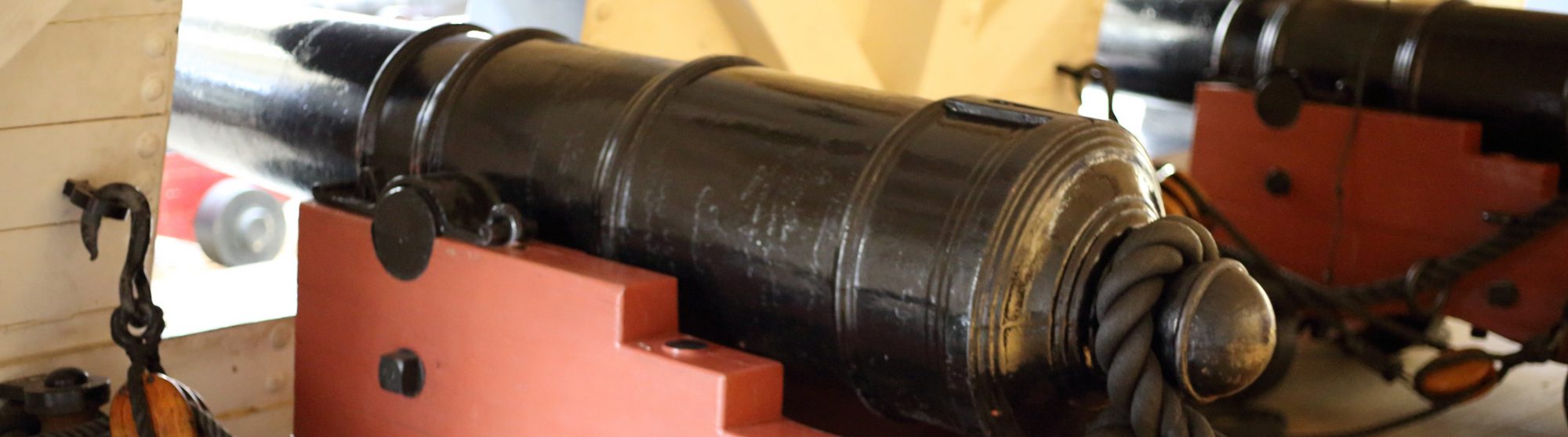
Battles of January 25 summaries plus museums, artwork, books and songs

Battles of January 25 including descriptions of the battles, geographic locations, associated artwork, and museums where a person can find associated artifacts and artwork.

Songs of the day:

The Bulge Blues Variation 1 (1940s Swing)

The Bulge Blues Variation 2 (1940s Swing)

The Watch is Failed (1940s German Cabaret)

1. Battle of the Bulge (Conclusion)

Date: December 16, 1944 – January 25, 1945

(Note: January 25 marks the official end of the offensive as designated by the U.S. Army, when German forces were pushed back to their original lines.)

War: World War II (Western Front)

Cause: Nazi Germany launched a massive, surprise counter-offensive through the dense Ardennes forest, attempting to split the Allied lines, capture the port of Antwerp, and encircle four Allied armies to force a negotiated peace.

Result: Allied victory. The German offensive was repelled, exhausting their reserve forces and paving the way for the final Allied invasion of Germany.

Paintings & Art

  • Painting: Battle for Monte in the Ardennes
    • Artist: Robert Noel Blair
    • Year: 1945 (Painted in January during the campaign)
  • Painting: Thunder in the Ardennes
    • Artist: Anthony Saunders
    • Year: Contemporary (c. 2000s)

Museums & Artifacts

  • Bastogne War Museum (Bastogne, Belgium): Features immersive 3D scenarios, tanks, and extensive personal artifacts from the battle.
  • National Museum of Military History (Diekirch, Luxembourg): Houses one of the largest collections of vehicles and weapons from the Battle of the Bulge, including rare German tank destroyers.
  • Bulge Relics Museum (Vielsalm, Belgium): Displays items recovered directly from the northern face of the battlefield.

Location

  • General: The Ardennes region, Belgium and Luxembourg.
  • Coordinates: 50.0036° N, 5.7196° E (Bastogne, a central hub of the battle).

Recommended Book

2. Action of 25 January 1797

Date: January 25, 1797

War: French Revolutionary Wars (Anglo-Spanish War)

Cause: A British frigate squadron under Commodore George Stewart intercepted the Spanish ship of the line San Francisco de Asís in the Gulf of Cádiz, attempting to capture the larger but isolated vessel.

Result: Spanish victory. The San Francisco de Asís successfully fought off the three British frigates, inflicting damage on them before retreating safely to Cádiz.

Paintings & Art

  • Painting: Combate entre el San Francisco de Asís y tres fragatas inglesas (Battle between San Francisco de Asís and three British frigates)
    • Artist: Unknown (Spanish Naval School)
    • Year: c. 1800s
  • Painting: Rescue of the Santísima Trinidad at the Battle of Cape St Vincent (The San Francisco fought here shortly after)
    • Artist: Antonio de Brugada Vila
    • Year: Mid-19th Century

Museums & Artifacts

  • Museo Naval de Madrid (Madrid, Spain): Holds the specific oil painting of this action as well as models and logs from the Spanish navy of the era.

Location

  • General: Gulf of Cádiz, off the coast of Andalusia, Spain.
  • Coordinates: 36.5333° N, 6.2833° W.

Recommended Book

3. Battle of Spion Kop (Conclusion)

Date: January 23–25, 1900 (Note: While the fighting peaked on the 24th, the British retreated overnight, and Boer forces reoccupied the summit on the morning of January 25, marking the definitive end of the engagement.)

War: Second Boer War

Cause: British forces under General Sir Redvers Buller attempted to break the Boer siege of Ladysmith by capturing the strategic hilltop of Spion Kop to command the surrounding area.

Result: Boer victory. The British suffered heavy casualties in the “acre of massacre” and were forced to withdraw, leaving the Boers in control of the heights.

Paintings & Art

  • Painting: General view of the field of battle before Spion Kop
    • Artist: Frank Dadd
    • Year: 1900
  • Painting: Louis Botha & the Battle of Spion Kop
    • Artist: James E. McConnell
    • Year: 1974

Museums & Artifacts

  • Ditsong National Museum of Military History (Johannesburg, South Africa): Houses Boer War artillery, uniforms, and art.
  • Ladysmith Siege Museum (Ladysmith, South Africa): Focuses specifically on the siege and the relief battles, including Spion Kop.
  • Spion Kop Battlefield (KwaZulu-Natal, South Africa): The site itself is an open-air museum with monuments, mass graves, and the original trenches.

Location

  • General: Spion Kop hill, near Ladysmith, KwaZulu-Natal, South Africa.
  • Coordinates: 28.6500° S, 29.5167° E.

Recommended Book

Books for sale

WarScholar Press

Contact Information

For more “Military History Inside Out” please follow me at www.warscholar.org, on Facebook at warscholar, on twitter at Warscholar, on youtube at warscholar1945 and on Instagram @crisalvarezswarscholar. Or subscribe to the podcast on Apple Podcasts | Google Podcasts | Stitcher | Spotify

Tags: military museum, military artwork, battles, Military History, War History, Battle Art, War Paintings, War Art, Military Art, Museum Visit, Art History, Historical Artifacts, Museum Collection, Battlefield Tours, History Museum, Museum Life, History In Art, Historic Preservation, January 25, On This Day, History, Military History, War History, Historical Events, History Buff, World History, Battle Of The Bulge, WWII, Ardennes 1944, Spion Kop, Boer War, South African History, Naval Warfare, Age Of Sail, Museo Naval, Bastogne War Museum, Historical Artifacts

As an Amazon Associate I earn from qualifying purchases.
Military History Inside Out banner

Battles of January 20 summaries plus museums, artwork, books, and a song

Battles of January 20 including descriptions of the battles, geographic locations, associated artwork, and museums where a person can find associated artifacts and artwork.

Mini-album of the day: Battle of Yungay (4 songs – 2 Latin Pop, two traditional)

1. Battle of Rio de Janeiro (Battle of Uruçumirim)

Date: January 20, 1567

War: The Portuguese conquest of French Antarctica (France Antarctique)

Cause: The Portuguese, led by Estácio de Sá, sought to definitively expel the French colonists and their Tamoio indigenous allies from Guanabara Bay to secure the territory for Portugal.

Result: A decisive Portuguese victory. The French fortification at Uruçumirim was destroyed, effectively ending the French colony of France Antarctique. Estácio de Sá was mortally wounded by a poisoned arrow during the fighting and died a month later.

Paintings & Art

  • Painting/Illustration: Estácio de Sá wounded by an arrow from the Tamoio Indians
    • Artist: Ivan Wasth Rodrigues
    • Year: 1959 (Illustration for historical text)
  • Engraving: Attack on the French Fort (Depictions of the conflict in Guanabara Bay)
    • Artist: Theodor de Bry
    • Year: 1592–1595

Museums & Artifacts

  • Museu Histórico Nacional (Rio de Janeiro, Brazil): Holds vast collections related to the colonial period, including weaponry and maps from the 16th century.
  • Monument to Estácio de Sá (Rio de Janeiro, Brazil): Located in Aterro do Flamengo, near the site of the battle, containing the crypt of Estácio de Sá.

Location

  • General: Flamengo Beach / Morro da Viúva area, Rio de Janeiro, Brazil.
  • Coordinates: 22°55′S 43°10′W

Recommended Book

  • France Antarctique: The French Colony in Brazil by Mario Balbiano di Colarme.

2. Battle of Millstone (Battle of Van Nest’s Mill)

Date: January 20, 1777

War: American Revolutionary War

Cause: Part of the “Forage War” in New Jersey. A British foraging party of roughly 500 men attempted to seize flour and supplies from Van Nest’s Mill.

Result: American victory. New Jersey militia, led by General Philemon Dickinson, crossed an icy river to flank the British, forcing them to retreat and capturing wagons, horses, and cattle.

Paintings & Art

  • Watercolor: Uniforms of the American Revolution (Associated with the Millstone Valley history)
    • Artist: Charles M. Lefferts
    • Year: 1909
  • Modern Art: Skirmish at Millstone (Various local historical illustrations often depicted in NJ historical societies)
    • Artist: Local historical artists
    • Year: Late 20th Century

Museums & Artifacts

  • Wallace House & Old Dutch Parsonage (Somerville, New Jersey): Located near the action, offering context on the Forage War and winter cantonments.
  • Museum of the American Revolution (Philadelphia, USA): Contains artifacts and exhibits detailing the New Jersey campaign and militia warfare.

Location

  • General: Manville, New Jersey, USA (near the Millstone River).
  • Coordinates: 40°32′28″N 74°35′35″W

Recommended Book


3. Battle of Rạch Gầm-Xoài Mút

Date: January 20, 1785

War: Tây Sơn Rebellion (Siamese–Vietnamese War)

Cause: Siamese forces invaded southern Vietnam to restore the Nguyen Lord, Nguyễn Ánh, to power. The Tây Sơn leader, Nguyễn Huệ, lured the Siamese navy into an ambush.

Result: A decisive Tây Sơn victory. The Siamese navy was almost completely destroyed in a surprise attack involving hidden infantry and artillery along the Mekong River banks.

Paintings & Art

  • Monument/Relief: Statue of Nguyen Hue and Relief of the Battle
    • Artist: Vietnamese State Commissioned Artists
    • Year: 2005 (Inauguration of the renovated relic site)
  • Folk Art: Ambush at Rạch Gầm (Woodcuts and propaganda posters)
    • Artist: Unknown
    • Year: 20th Century

Museums & Artifacts

  • Rạch Gầm – Xoài Mút Victory Historical Relic (Tiền Giang Province, Vietnam): A dedicated museum site featuring a massive bronze statue of Nguyễn Huệ, galleries of weapons, and ceramics from the period.
  • Vietnam National Museum of History (Hanoi, Vietnam): Houses weaponry and documents relating to the Tây Sơn dynasty.

Location

  • General: Tiền Giang Province, Vietnam (Section of the Mekong/Tien River).
  • Coordinates: 10°20′N 106°19′E

Recommended Book


4. Battle of Yungay

Date: January 20, 1839

War: War of the Confederation

Cause: The Peru-Bolivian Confederation, led by Andrés de Santa Cruz, threatened the regional balance of power. Chile and Peruvian dissidents (the United Restoration Army) sought to dissolve it.

Result: A decisive Chilean and Restorationist victory. The Confederation was dissolved, and Santa Cruz went into exile.

Paintings & Art

  • Drawing: Panorama of the Battle of Yungay (From a Pacific Watercolor Album)
    • Artist: Unknown (Soldier or Campaign Artist)
    • Year: 1840
  • Sculpture: Monument to the Roto Chileno (Commemorating the common soldier at Yungay)
    • Artist: Virginio Arias
    • Year: 1888

Museums & Artifacts

  • Museo del Carmen de Maipú (Santiago, Chile): Houses significant collections of military art, uniforms, and relics from 19th-century Chilean wars.
  • Museo Nacional de Arqueología, Antropología e Historia del Perú (Lima, Peru): Holds artifacts related to the Republican era and the Confederation.

Location

  • General: Yungay, Ancash Region, Peru.
  • Coordinates: 9°08′S 77°44′W

Recommended Book

  • The Making of Modern Chile by Simon Collier and William F. Sater.

5. Battle of Imbros (Battle of Kusu Bay)

Date: January 20, 1918

War: World War I

Cause: An Ottoman naval sortie led by the battlecruiser Yavuz Sultan Selim (formerly Goeben) and light cruiser Midilli (formerly Breslau) attempted to attack Allied transport ships and monitors.

Result: Strategic Allied victory. While the Ottomans sank two British monitors, they ran into a minefield. The Midilli sank, and the Yavuz was heavily damaged and beached, ceasing to be an offensive threat.

Paintings & Art

  • Watercolor: The Wreck of HMS Raglan: in Kusa Bay, Imbros, after action with the “Goeben”
    • Artist: Frank Mason
    • Year: c. 1918
  • Illustration: Sinking of the Breslau (Daily Sketch illustration)
    • Artist: Period War Artists
    • Year: 1918

Museums & Artifacts

  • Imperial War Museum (London, UK): Holds the Frank Mason painting and naval logs from the engagement.
  • Istanbul Naval Museum (Istanbul, Turkey): Contains artifacts related to the Yavuz and Midilli, including bells, nameplates, and uniforms.

Location

  • General: Off the island of Imbros (Gökçeada), Aegean Sea.
  • Coordinates: 40°14′N 25°58′E

Recommended Book


Books for sale

WarScholar Press

Contact Information

For more “Military History Inside Out” please follow me at www.warscholar.org, on Facebook at warscholar, on twitter at Warscholar, on youtube at warscholar1945 and on Instagram @crisalvarezswarscholar. Or subscribe to the podcast on Apple Podcasts | Google Podcasts | Stitcher | Spotify

Tags: military museum, military artwork, battles, Military History, War History, Battle Art, War Paintings, War Art, Military Art, Museum Visit, Art History, Historical Artifacts, Museum Collection, Battlefield Tours, History Museum, Museum Life, History In Art, Historic Preservation, January 20, On This Day, History, Military History, War History, Historical Events, History Buff, World History, Battle Of Yungay, Battle Of Millstone, Battle Of Imbros, Rach Gam Xoai Mut, Battle Of Rio De Janeiro, American Revolution, WWI, Tay Son, Chilean History, Naval Warfare

As an Amazon Associate I earn from qualifying purchases.
Military History Inside Out banner

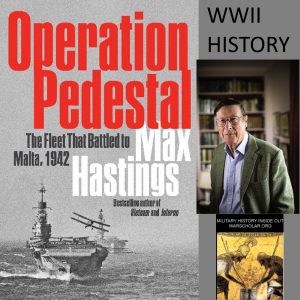
How WWII hung in the balance in the Mediterranean Sea – Interview with Sir Max Hastings

Sir Max Hastings Operation Pedestal

How WWII hung in the balance in the Mediterranean Sea – Interview with Sir Max Hastings

Check out this book here   https://amzn.to/3p5MJHk

Interview Timeline

Sir Max Hastings is the author of twenty-six books, most about conflict, and between 1986 and 2002 served as editor-in-chief of the Daily Telegraph, then editor of the Evening Standard. He has won prizes for journalism and his books. He has recently published a history of WWII Operation Pedestal. We spoke about the book and the operation.  Operation Pedestal: The Fleet That Battled to Malta, 1942 (Harper, 2021)

1:22 – Sir Max explains why he wrote about Operation Pedestal.

3:29 – Sir Max talks about Churchill’s thinking about Malta and Operation Pedestal.

6:45 – Sir Max discusses operations in the Mediterranean.

8:26 – Sir Max talks about the first few days of the Operation.

8:55 – Sir Max talks about how he balances the book between the Axis and Allies actions.

12:07 – Sir Max talks about Hitler’s thinking in regards to Malta.

14:55 – Sir Max talks about British successes early in the operation.

15:54 – Sir Max talks about the constant threats the British were facing each day of the operation.

21:40 – Sir Max talks about a dangerous sunset Italian and German air attack.

22:22 – Sir Max talks about how quickly the events in the operation got back to world leaders.

27:59 – Sir Max talks about the difficulties of being a ship captain.

31:46 – Sir Max talks about the civilians participating in the convoy operation.

33:31 – Sir Max talks about the Ohio and the attacks it endured.

37:10 – Sir Max talks about how mad the Royal Navy was at the Royal Air Force.

38:27 – Sir Max talks about how he got some of his information.

42:20 – Sir Max talks about the Arctic convoy.

43:19 – Sir Max talks about the sheer exhaustion of the men who were part of the operation.

46:02 – Sir Max talks about the risks taken in the operation as far as the amount of resources used.

47:47 – Sir Max talks about the emotional aspect of the burials at sea during the operation.

49:59 – Sir Max talks about the civilian burial practices and how the civilian crews acted.

52:33 – Sir Max talks about having visited Malta and their courage during the war.

54:00 – Sir Max talks about the war scars still left at Malta.

55:12 – Sir Max talks about how pivotal the few weeks of Pedestal were.

56:45 – Sir Max talks about the importance of willpower in the war.

59:22 – Sir Max talks about how little known this operation is despite its importance.

1:00:04 – Sir Max talks about his next project being about the Cuban Missile Crisis.

1:01:20 – Sir Max talks about his excitement in studying history,

1:02:35 – Sir Max talks about the importance of the story of Pedestal.

Links of interest

https://amzn.to/3p5MJHk

https://www.harpercollins.com/products/operation-pedestal-max-hastings?variant=32306180489250

Contact Information

For more “Military History Inside Out” please follow me at www.warscholar.org, on Facebook at warscholar, on twitter at Warscholar, on youtube at warscholar1945 and on Instagram @crisalvarezswarscholar. Or subscribe to the podcast on Apple Podcasts | Google Podcasts | Stitcher | Spotify Please see historyrabbithole.com for a list of my dozen or so blogs and podcasts. You’re sure to find something you like.

Guests: Sir Max Hastings

Host: Cris Alvarez

Tags: Books, audio interviews, author, podcast, Harper, WWII, Naval Warfare, United States, Germany, Britain,

Check out this book here   https://amzn.to/3p5MJHk

As an Amazon Associate I earn from qualifying purchases.

Military History Inside Out banner